I am a 9/11 Republican.
There are many of us, a silent demographic forged by our generation’s “day which will live in infamy.” For some, what changed them was a jarring intrusion of the seventh century and the uncivilized world into the post-Cold War, “end of history” reverie that they had been living in throughout the 90s. For me, it was something else, a confrontation with something internal, rather than outside forces. It was encountering a moral attitude and a version of intellectualism that I had never thought possible.
Here is what 9/11 did to me.
The Attack
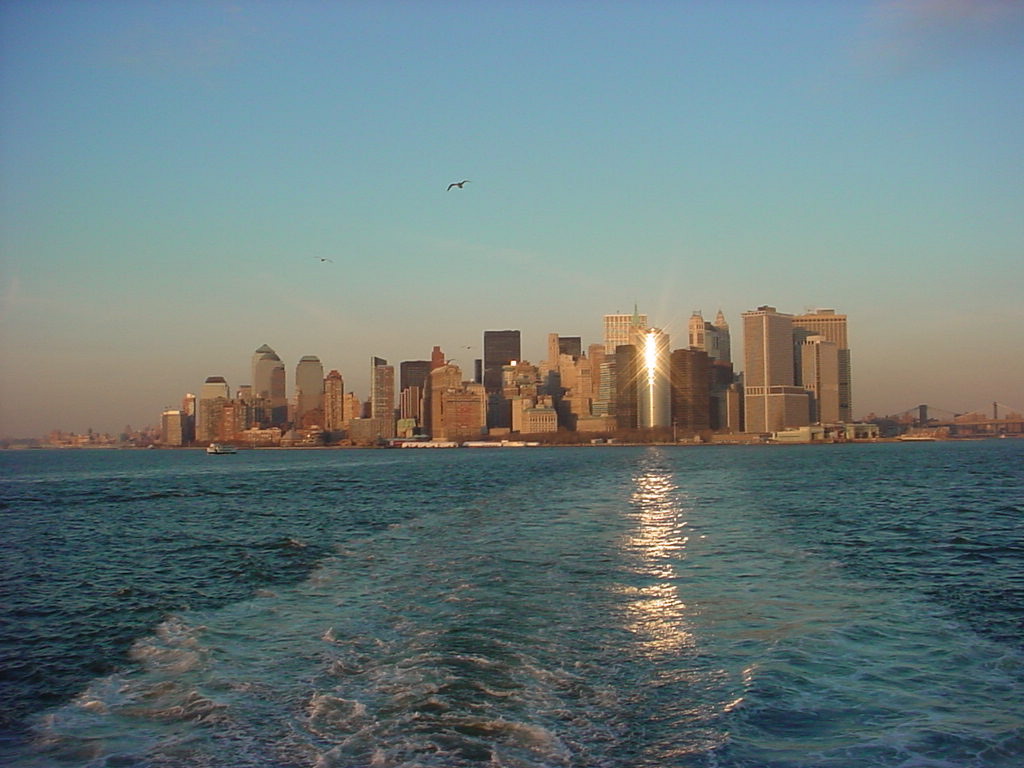
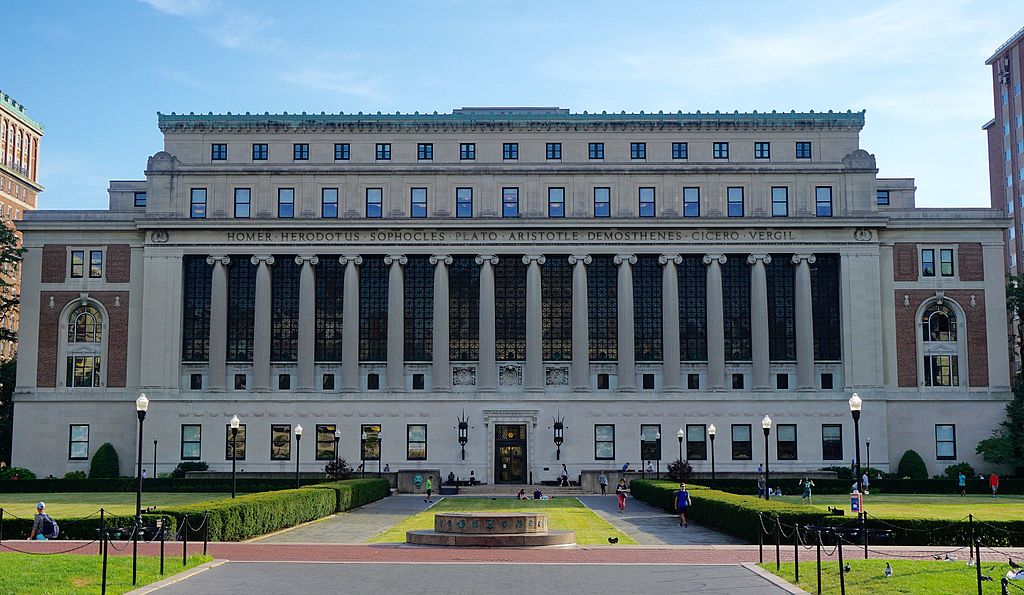
On September 11th 2001, I was starting my second semester at Columbia University. I had transferred from a small music school at the start of the year, and was embarking on my own little slice of life New York Adventure that some of us are so fortunate to have.
On that day, at that time, I didn’t know much about New York. I had been there eight months, and was living an isolated student life as an older, non-traditional student, having spent five years in the Army and two years in small state schools before transferring to Columbia. I had a small, university-owned apartment a few blocks from campus, no friends, and no money. I had experienced New Year’s Eve in Times Square three days after I moved to the city, but all I had done since then was attend class and try to orient myself to my new school environment. I had walked around the city, as a penniless student can, but I hadn’t “experienced” the city, and I didn’t really know anything about it other than that I loved it.
The morning of September 11th was perfect. A clear, crisp, cloudless day, the kind where you just open your windows and soak it all in.
I had a new roommate, who was starting his second year at Columbia Business School. There was no television in the apartment, but my roommate liked to listen to the radio in the morning while getting ready for school. While we were walking around the apartment, shaking off the cobwebs and getting ready for class, he casually said “Hey did you hear a plane hit the World Trade Center?” I hadn’t, because I prefer silence in the morning to the radio. I didn’t think anything of it, because I knew a plane had hit the Empire State Building many years ago, and, as I thought to myself, “These things happen.” After he mentioned it I thought “I should look that up later today and see what happened,” and promptly forgot about it.
A few minutes later, when we crossed paths again, he said “Did you hear that a second plane hit?”
Uh-oh.
It was then clear that this wasn’t an accident. It was terrorism.
My first thought, putting myself in the mind of someone who would do something like this and quickly running through scenarios, was “I wonder if they brought a nuke.” Friends of mine had mentioned rumors of suitcase nuclear weapons when I was in the Army, and it occurred to me that if you were going to go to the trouble of crashing a plane into a building and committing suicide, you might as well bring a bomb with you. Maximizing death and destruction is clearly your goal, and one way to inflict even more damage than your suicide plane would be to bring along a massive bomb.
My girlfriend at the time was living in Queens, and had jury duty that week. I called her landline from my own, and when she answered I said “Turn on the tv.”
“Which station?”
“Any station.”
So she turned on our local city news station, New York One, which was playing live footage of the smoldering buildings. “Do you think I should still go to jury duty?” (For those unfamiliar with Manhattan, City Hall is very close to the World Trade Center) “NO.” “Are you sure?” “YES. I’m sure they’ll understand.”
I had not seen any pictures or footage of the attack, so she explained what she was seeing and what they were saying on tv, while we both tried to fathom just what the hell is happening now. Then she audibly paused and said “Oh my god. One of the buildings just came down…get out of Manhattan.”
This moment probably holds the blue ribbon for “times I’ve outsmarted myself in life.” As soon as she said that, I pictured the island of Manhattan immediately being locked down and sealed off, all trains and bridges being instantaneously shut down and all modes of public transportation stalled. In fact, public transportation was still moving for some portion of the next hour, and there is a decent chance I actually could have gotten off the island, if I hustled quickly enough to the right trains or bridges. In this reality, I would have spent the day in Queens, watching the day unfold from her apartment in Astoria.
What I actually did was go to class.
I didn’t know what else to do.
My classroom was five or six blocks away up Broadway. In college I was the “Big Headphones Guy,” so I grabbed my cd player/radio combo, slapped on my headphones, and headed to my German class listening to AM radio, 1010 WINS.
As I walked up Broadway on this picturesque, postcard morning, I soon noticed something: you could tell who did and didn’t know. Half of us were walking in a daze, each step taken tentatively and gingerly, as in a dream, like we didn’t quite know what reality was. The other half were walking la-dee-da, practically skipping down the street, on their way to work or class, enjoying this most perfect of fall mornings. I remember vividly the serene smiles on their faces, while I was stumbling forward in a trance, listening to the sober sounds of AM radio clinically repeating the known details of an ongoing terrorist attack a few miles south of me.
On my way to class, I found out that the Pentagon has also been attacked, exactly how was unclear. Suddenly the reporter said “We’re hearing reports that a plane has gone down in Pennsylvania.” Clearly this was meant for the White House. If you attack the World Trade Center and the Pentagon, there’s only one other target that could be on your list.
“We’re at war.”
This is how much the world had changed since I left my apartment three blocks ago.
I didn’t know who we were at war with. I didn’t know where we were at war. I didn’t know how many attacks were underway. But I knew that we were at war.
When I got to class, something amazing happened: everyone showed up. It was a ten-twenty class, and probably every one of us had taken it so that we could sleep in in the morning. As I recall, almost none of my classmates even knew that we had been attacked. The only one missing from our class was our instructor, who we later learned lived not far from the site, and was trapped in her neighborhood all day.
Our classroom was a small conference room, with a long table that would seat our class of about fifteen people. Since I had the big headphones, I placed them on the table at my end, faced the speakers out, and turned the volume all the way up so that everyone could hear. As students groggily filed into the room, we would fill them in on what was happening in New York and around the country.
Before long, most of the class had arrived, and we sat there numbly listening to the AM radio reporter reciting the facts as we knew them. For five or ten minutes, we listened to the radio, looked at each other, and wondered what to do.
Then, the radio went silent. We went silent. An announcer said “Oh my god. The second tower just came down.”
Another moment of silence. Then another. Panicked glances at our classmates. Then I gingerly grabbed my cd player, turned the volume down, and our class slowly rose and walked out, into our new world.
I had no idea what to do next. The rest of the day is a blur.
I know I tried to call my mom, and she tried to call me. We could not reach each other until sometime in the afternoon, but with everything happening so fast, that was not particularly distressing.
Like many others, my first thought when I tried to think of something I could do to make myself useful was to look for somewhere to donate blood, especially because I’m a universal donor. And at first, we thought they were going to need a lot of it. We could not know how horribly wrong we were.
As the day went by, each time we listened to the news, we hoped and expected to hear word of how many survivors there were, where they were being sent, and how much blood would be needed. And each horrifying hour that went by, it became more tragically clear, that there would be few to no survivors.
For the rest of the day, I mostly spun my wheels, wondering what to do. Obviously there was nothing I could add by going to the scene. It was becoming clear that there would not be enough survivors, if there were any, to increase the need for blood donations.
Around mid-afternoon I saw a middle-aged black man, in black pants and a black t-shirt, sitting on a bench in the median of Broadway at an intersection near my apartment. He must have walked uptown from the scene. He was covered in ash from head to toe, unblinking eyes fixed on the ground in a haunted thousand-yard stare. I wondered what he had seen. I could never ask him.
My girlfriend was not too happy that I had left her alone that day, but by the time the attack was over, Manhattan truly was shut down, and there was no way off the island. I don’t know what I did the rest of the afternoon, but come nightfall, I had a plan, the only thing that could keep my mind occupied while it was spinning in a world of emotions and confusion: go to my local bar that had all the tvs, grab a few drinks, and watch us nuke Afghanistan.
The Aftermath
What happened next was…disturbing.
The aftermath of September 11th was my first real-world collision with relativism. I honestly don’t know if I had ever thought consciously about it before then. But I encountered it everywhere in the months and years afterwards.
But before the relativism came cowardice.
Days after the attack, I was sitting on the steps at Columbia, talking to a sophomore I knew. We were ruminating over what had happened and what may happen, and he said something that jarred me: “If there’s a draft, I’m moving to Canada.”
This gave me a pause that’s hard to put into words. Let me try to illustrate with my internal monologue.
“You fucking coward. They killed three thousand people eight miles from here. You’re a nineteen-year-old man, born at the top of the richest country on earth, given everything in the world by America, and when not just your country but your city is attacked, your first instinct is to run away??”
The intensity of my disgust goes far beyond these words, but it’s the best I can do on paper. I could not believe the absolute gall of this person, this privileged, fighting-age man, whose first thought when there was a mass murder in his city was to run away and save his own skin. This was a certain kind of person at Columbia, and it was a major eye-opener to discover that they exist.
As odious as that sentiment was, the more common feeling I encountered was one of resigned relativism, perhaps mixed with or used as an excuse for cowardice. For example, someone once asked me at a student party “What do you expect when you build towers to the sky…? Someone’s going to try to knock them down.” As if we brought it on ourselves, with our own Babylonian hubris. In one of my classes that semester, another student said that he was “really disturbed by all the flag-waving” that had been happening since the attack.
Well. That’s certainly one thing to be angry about. I can think of a few thousand others, still buried a few miles south of here. But ok.
My response was “Well, if it’s good enough for the firefighters who are still digging through the rubble, and the service-members who are going to go fight these guys, maybe it’s good enough for a Columbia student.” Not much response to that, of course. Certainly not a reconsidering. I soon learned that Columbia students, like other New York intellectuals, were too smart for simple-minded concepts like patriotism.
The reflexive aversion to loving and defending your country was not the only thing that surprised me. In addition to the lofty, generalized relativism I encountered, there was also a specific kind. Islam and Islamic societies were topics that had probably never crossed my mind before September 11th. Now they were at the forefront.
These were early days, before people spent all day online, before the real institution of all knowledge on the internet, and before I had read books like Infidel or Islam and the Future of Tolerance. But I did the best I could, reading articles about Islam, Saudi Arabia, other countries in the region, and talking to people about it constantly.
To my great shock, when I engaged other students in conversations about oppressive Islamic theocracies, I did not hear condemnation, or anger, or judgment of any kind. It was more “Well that’s just how they are.” I would reply “Yes. That is how they are. And it is messed up. Problematic, you might say.”
Where was that second step, the critique? Why was that not part of their analysis? Where was their moral investigation of these types of societies generally, and specifically how they tend to create barbarism and terrorists?
The answer is: there really was none. In conversation after conversation, there was just no moral calculus applied to tyrannical Islamic societies. By New Yorkers. In the aftermath of September 11th.
Illustrative is a conversation I had with a friend who was a Barnard student. I was being a typical Ivy League nerd, having a Socratic dialogue about the topic in a bar, finding out how she felt about the Islamic societies that breed terrorists, and what she thought we should do about them. I was expressing my hostility towards such cultures, and she was indicating that she really didn’t want to judge them.
By now I’d had many such conversations, could predict where they were going from the initial salvo, and had some responses mapped out for the things people typically say.
My first question was “Can we say that America is a better society than Saudi Arabia?” “No.” Of course not.
I knew that a New York intellectual is instinctively going to think “racism” when faced with that question. So I had a follow-up.
“Can we say that America in 2002 is a better society than Germany in 1938?”
“No.”
As on the college steps, I was actually stumped, completely frozen by this response. I tend to think very fast, and my mind was racing with the necessary conclusions that must come from an axiom like this. What this means, what a person must hold in their heart to say something like this, what their view of the world must be. And it is terrifying when you think through the moral consequences of this philosophy for even a moment.
As months wore on, I started to draw some bleak conclusions about my fellow students, and about educated, intellectual New Yorkers. My first response to my city being attacked was rage, first hot, then cold, but always instantly resurfaced whenever I paused to think about the attack, whenever I walked certain streets downtown, or whenever I saw a mass of desperate “Have you seen me?” posters covering a pillar or a wall in a subway station. On the day we were attacked, I could not have fathomed that I would be living in a Bizarro World where I felt virtually alone in my rage, almost that I had to hide it or be ashamed of it, because it would out me as some sort of wide-eyed, open-jawed anachronism to my classmates and neighbors.
This is what it was like to be a New Yorker after 9/11. Or, rather, a New Yorker who wanted to defend New York.
Lest you think I exaggerate, or that somehow, I found the only New Yorkers who felt this way, none other than Christopher Hitchens had a similar experience, running in truly elite intellectual circles in New York, where he taught, and Washington, D.C., where he lived. He published several vital essays before the end of that year, which are essential reading for understanding the liberal mind in the post-9/11 world. Here is a sample of what he experienced in the weeks after the attack.
October 6, the day immediately preceding the first U.S. counterstroke against the Taliban and Osama bin Laden, found me on a panel at the New York Film Festival…on a stage with Oliver Stone, who spoke with feeling about something he termed “the revolt of September 11.”
I challenged Stone to reconsider his view of the immolation of the World Trade Center as a “revolt.” He ignored me. Later he added that this rebellion would soon be joined by the anti-globalization forces of the Seattle protesters. When he was asked by a member of the audience to comment on the applause for the September 11 massacres in Arab streets and camps, he responded that the French Revolution, too, had been greeted by popular enthusiasm.
Although those who don’t read The Nation, the New Statesman, and the London Review of Books, and who haven’t come across Susan Sontag’s disdainful geopolitical analysis in the pages of The New Yorker, may not be aware of it, these views are, sadly, not uncommon on the political left. Indeed, I would surmise that audience approval of [these views] was something near fifty-fifty.
The sense I want to convey to the reader is the prevalence of these sentiments, in the city where the attack occurred, in the wake of the recency of the attack. Hitchens may do a better job than I when he explains that
[T]hree weeks after a mass murder had devastated the downtown district, and at a moment when the miasma from the site could still be felt and smelled, a ticket-buying audience of liberal New Yorkers awarded blame more or less evenhandedly between the members of al Qaeda and the directors of U.S. foreign policy.
By this time I was entering my twenty-sixth day of active and engaged antagonism toward this sort of talk, or thought, and was impressed despite myself by the realization that I was the first person Stone…and some audience members appeared to have met who did not agree with them. Or perhaps I should rephrase that: I was the first person on the political left they had met who did not echo or ratify their view.
Pause and reflect on the enormity of this statement. What Hitchens is saying, and what I can confirm, is that self-flagellation and a “we had it coming” sentiment were not rare, but commonplace in the epicenter of the September 11th attacks. That in the aftermath of the horrors we witnessed on live tv and saw replayed for weeks and months, in the wake of all the terrible ways to die we saw that day, rather than patriotism, the very inhabitants of the city that was attacked recoiled into a reflexive anti-patriotism. Rather than respond with a righteous fury and desire to defend their country, they instinctively ran towards ideological anti-Americanism, and went so far as to venture into terrorist apologetics.
Pusillanimous doesn’t even begin to describe it.
Comedian Evan Sayet noticed something similar from his circle of liberal friends after September 11th.
For years and years I’d hear my friends from the Left say how evil and horrible and racist and imperialistic and oppressive America is, and I’d chuckle to myself and think, “Oh, they always say that; they love America.” Then on 9/11, we were beaten up, and when I grabbed them by the collar, and I said, “Come on, let’s help her. Let’s help America,” they said, “Nah, she deserves it.”
At that moment, I realized: They really do hate America.
What I’ve recounted feels like a terrible secret I’ve kept for twenty-five years. I needed to write this because I think many people truly do not know. Because some things are too appalling to even consider possible. Because some depths of cowardice are so low, you would not think another person capable of sinking to them.
Because if I did not tell you, you would not believe that New Yorkers, famous for their grit and resilience, shrank morally and intellectually from defending their city in its most vulnerable moment. You would not believe that rather than rushing to defend their city and the nation it helped found, they rushed to justify its attackers. Rather than find a reason to fight, they found a reason to retreat.
I know that many New Yorkers had the opposite intuition, the right instincts, to defend their city, to curse the barbarians who attacked it, and to support finding and destroying every last one of them. These were often the middle-class New Yorkers, the working-class New Yorkers, the multi-generational New Yorkers, the kind of people who waved flags, drove cabs, and ran into burning buildings that were about to collapse to save others.
But the educated class, the professional class, the Ivy League class, the intellectual “elites” that also fill this city had a different reaction. They were too smart, too sophisticated, too global to feel anything as low and mean as patriotism after September 11th.
A popular political joke these days is “What radicalized you?”
This. This radicalized me.
When I talk to normal people in the rest of America about coastal elites, relativism, and intellectual snobbery, I often tell these stories, and I end with this: however depraved, nihilistic, and relativistic you think these people are, they are far worse than that. You have no idea. Only by seeing their immediate, instinctive reaction mere miles from where the World Trade Center collapsed, in the city they call home, can you see the fruits of their philosophy in full bloom.
Many other things contributed to my rightward shift in those years, including a burgeoning interest in economics, and a deeper study and understanding of world history. But far and away, the deepest, the most abrupt, and the most jarring reason my politics changed was witnessing the instincts of the educated elites in the wake of atrocity firsthand.
I am a 9/11 Republican. And I will never forget why.