We have a strong safety net. Why doesn’t it always work? Why doesn’t it keep everyone out of poverty?
If we just spend enough money and make the safety net big enough, will that end poverty? Or will people make decisions that keep them in poverty no mater how much money we spend on the safety net?
Is there a magic bullet or recipe that can help someone escape poverty? Turns out: there is. Economic researchers who study poverty have found 3 choices people make that almost entirely determine whether they escape poverty or remain in poverty.
The good news for those in poverty is that the power to improve their lives is entirely in their hands.
The bad news for those in poverty is that the power to improve their lives is entirely and only in their hands.
This gets right to the heart of the discussion about the solution to poverty, and whether “taxing the wealthy a little bit more” as Jamie Dimon says is actually the cure.
Here I explore some of the questions from my last post about the idea that “taxing the wealthy a little bit more” will cure or substantially reduce poverty and the hardships faced by the poor.
Should there be a social safety net?
Does everyone agree that there should be a safety net?
What causes someone to be poor? The answer could be that you’re born poor. In that case it’s easy to determine.
But not everyone who is poor now was born poor. If that’s the case, what are the factors that caused them to move from say the middle class down the economic ladder?
What keeps them poor? Is it primarily a lack of money? Or is it personal choices, culture, and family?
Some people, many people in fact, do escape poverty, so it clearly is possible. How do they do it? Do social welfare and government programs get them out of poverty? Or is it their own choices and lifestyles, over the long haul?
What’s the difference between successful cultures, families, and individuals, and unsuccessful ones?
Would you like to know the answer to this question? Well, I’ll tell you!
In my last video, I addressed comments made by JP Morgan CEO Jamie Dimon that he would tax the wealthy “a little bit more” to alleviate the problems of the poor. I asked and addressed who he means by “The Wealthy” who should be taxed more to solve these problems.
Here I address whether money is actually the solution for the problems that the poor face, and whether his premise even makes sense or is accurate.
Here is the testimony of an economic expert who studies poverty that lists the three-pronged “cure” for poverty mentioned in my video.
This is a long, dense read, that I don’t necessarily recommend taking the time for, but here is a very important nugget from this testimony that is quite frankly the “Magic Bullet” for poverty that we’ve been looking for. I find it strange that these three factors are virtually unknown to anyone and almost never talked about. We should be talking about them constantly if we want to help people make their lives better and reduce overall poverty. Everyone in America, especially all politicians and policymakers, as well as people who are interested in politics, society, and the good of mankind should know and talk about these three factors whenever helping the poor and alleviating poverty come up.
Strategies to Reduce Poverty
Although the dramatic increase in federal spending has not led to an overall reduction in the nation’s poverty rate, at least two strategies have been successful in reducing poverty within specific demographic groups. Both should be considered major successes of the nation’s social policy and both could be extended. The first is to give money to people who are not expected to work and the second is to use welfare policy to strongly encourage work and then to subsidize earnings because so many of the poor have low skills and often cannot earn enough to escape poverty.
Before reviewing these and other strategies for reducing poverty, I want to emphasize the importance of individual initiative in reducing poverty and promoting economic success. My Brookings colleague Isabel Sawhill and I have spent years emphasizing the importance of individual responsibility in reducing poverty and increasing opportunity. One of our arguments, based in part on a Brookings analysis of Census Bureau data, is that young people can virtually assure that they and their families will avoid poverty if they follow three elementary rules for success – complete at least a high school education, work full time, and wait until age 21 and get married before having a baby. Based on an analysis of Census data, people who followed all three of these rules had only a 2 percent chance of being in poverty and a 72 percent chance of joining the middle class (defined as above $55,000 in 2010). These numbers were almost precisely reversed for people who violated all three rules, elevating their chance of being poor to 77 percent and reducing their chance of making the middle class to 4 percent. [25] Individual effort and good decisions about the big events in life are more important than government programs. Call it blaming the victim if you like, but decisions made by individuals are paramount in the fight to reduce poverty and increase opportunity in America. The nation’s struggle to expand opportunity will continue to be an uphill battle if young people do not learn to make better decisions about their future.
Here is a discussion about some other aspects of poverty from the esteemed economist Thomas Sowell.
Here is a blog post where I talk about the value of economic thinking generally, as a way to see things more clearly on a topic like this.
Recently I got around to listening to a debate that’s been in my playlist awhile, between Christopher Hitchens and Al Sharpton, to debate Hitchens’s book God Is Not Great: How Religion Poisons Everything. I was very curious what this would sound like, because on one side you have an erudite, scholarly man with a deep knowledge of cultures and history, and on the other side you have…Al Sharpton. One reason I haven’t listened to it is because it’s hard to find time to listen to 90 minute long debates in one or even two sittings, and I don’t like to break up a long speech or debate because I lose focus and lose the points. But another is because I figured listening to Al Sharpton for an hour and a half would be so painful, I might need several Xanax to make it through, and I just couldn’t bring myself to do it. Kind of like making yourself watch a bad movie that you know your girlfriend likes. It’s a work of procrastination rather than passion.
This is gonna get ugly
BUT, having done it, I found myself surprised by a couple of things. First of all, this debate wasn’t nearly as humiliating for Sharpton as I thought it would be. This isn’t because he turns out to be more intelligent or more informed than I thought he was, if anything he seems even less informed and coherent than I imagined him to be. But he does do something well, something that does speak to his intelligence and political experience…he can talk for a looong time without saying anything substantive, and he knows to, and knows how to, evade points or arguments that weaken his position, or strengthen his opponent’s. It’s the skills and techniques of a politician in a primary debate…address nothing your opponent says, stay on message, and repeat, repeat, repeat. That he is actually funny makes him appealing to an audience, and like a politician, he makes obvious but oblique insinuations to the morals and motives of his opponent in order to derail him from his message (if his opponent is susceptible or oblivious to such tricks, which Hitchens is not). If his opponent is easily offended or distracted, he can steer the whole conversation away from what is supposed to be the substance of the discussion into an irrelevant argument. And of course, he wraps it in an “Aw shucks,” “C’mon Man!” patois that will endear him to viewers susceptible to such tricks.
Something else that surprised me is that I actually found myself agreeing with one of the points Sharpton makes, although not for the reasons he gives. This has to do with the relation of morality to God, which is a common enough argument to be cliched at this point, but which I have found a new appreciation for by thinking past the point of which most believers state it, and which most atheists argue against it. But more on that later.
The main thing that saves Sharpton from a night of embarrassment and humiliation, aside from his general ability to deflect and joke away serious points, is that he does in fact come up with a novel argument against Hitchens’s thesis that “religion poisons everything,” by focusing rather on the title of the book than the argument itself.
For those who are unfamiliar or only vaguely familiar with Christopher Hitchens, he is the classic British “Man of Letters,” attending boys’ prep schools as a young man, and studying at Oxford for college. If you read him or listen to him speak, you quickly arrive at the impression that he is one of those gentlemen who has read Everything. At least everything important, of substance, or of canon. For example, he is one of the few who can claim to have read every word George Orwell ever wrote. That type of man.
As such, when he writes of religion, when he criticizes religion, he is writing with a deep knowledge and extensive study of the matter, of the codes and histories of religion, of the cultures from which they came and in which they exist. Hence his book, and his arguments in this debate, are filled with specific examples of fundamental wrongs, inconsistencies, hypocrisies, and evils of religions, in particular moments and across time. His are not the critiques of a dabbler or of someone with a bias who has cherry-picked the weakest points of a philosophy he disagrees with to make snide, shallow criticisms. He can, literally, cite chapter and verse from the Torah or the Hadith to demonstrate why he believes religion, in toto, to be a pernicious force in the world.
Sharpton evades all that by simply ignoring all specific religious, dogmatic, scriptural criticism of religion, Christianity or otherwise. It’s really a startling technique, and again, it certainly demonstrates a high level of craftiness and rhetoric, rather than insight and intelligence. You may find it strange that a man who is introduced in this debate as an “ordained minister” and a “man of God” does not, a single time, defend a word of biblical scripture or Christian dogma in a 90 minute debate about the value of religion. I was certainly startled when I came to realize this as the debate was coming to an end, and the audience as well as Hitchens himself were also taken aback. Hitchens even said at the end of the debate that “this is a first” for him, that a man of the cloth would not defend a word or tenet of the Bible.
What Sharpton does instead is attempt to put Hitchens on the defensive, by asking him to defend the premise that God is not great. He says this every time Hitchens rattles off a litany of crimes against logic or morality (sometimes both) that religion and religions commit: “I am not here to debate the idea that Christianity is not great, or that Islam is not great, or that organized religion is not great…I am here to debate the idea that God is not great, since that is the title of the book that Brother Hitchens has written.” Sharpton wisely concedes that a number of terrible things have been done and are being done by man in the name of religion or in the name of God…but says that does not prove that God is not great, so he asks Hitchens to offer proof of that statement. And of course, the entire point of the book is to make an argument for the pernicious influence of organized religion in the course of human affairs, to point out the evil and harm caused by believing you have God on your side, to point out the terrible things you would only do if you have that belief. Of course, the whole point of the book is to demonstrate how religion manifests in and affects human society, not to argue which qualities a potentially existent or non-existent sky wizard himself may have. Sharpton knows as well as the rest of us that no one can prove the existence or non-existence of God, let alone what qualities such a being may have, great or not.
Sharpton’s approach was a terrible example of sincere, good faith, rational argumentation and engagement in debate, but it was an absolute master class on obfuscation and deflection, and I have to say I learned something from it, at least. I learned how well a politician can take a straightforward, obvious topic of debate, in which he is almost certain to lose, look bad, or have to make huge concessions, and completely avoid any of those negative outcomes by simply directing everyone’s attention to a fake question, to a false issue, and insisting that that is the crux of the debate. By talking slowly (seemingly thoughtfully), making jokes, and using blatant deflection just a few times, you can eat up time and run down the clock so that you can actually sit there for 90 minutes without ever having addressed the substance of the debate, shake hands, walk away, and look like you at least came out even. So while this conversation was less than enlightening from an intellectual perspective from Sharpton’s end, it was actually a pretty illuminating insight into how politicians think and how they work.
But here’s where it gets interesting. There is an issue on which Sharpton and I agree.
It’s not one of scripture. It’s not one of dogma or faith. But it is one of morality.
Where does morality come from? This is one of the oldest questions in human history, right up there with where did we come from, what is the meaning of life, and of course, is there a God? Like many people, I’ve always been interested in this topic, have had many thoughts and discussions about it, and have heard many an argument on the subject from a Sam Harris or a Christopher Hitchens.
For a believer, for a person in Sharpton’s shoes, there is a really just one core question that they use as the basis of their view on morality, and which they think is the “Gotcha!” question that pins down atheists such as Christopher Hitchens: where does morality come from if there is no God? Sharpton says says over and over in this debate, “If there is no God, how do we decide what is moral? Who decides it? Whoever is stronger at any given moment?”
This is really the grade school version of a moral argument from a believer’s point of view, one which is easily refuted and shown to be silly and illogical, without much effort. You really only need to take one step of logical thought to refute this line of reasoning, by asking the most immediate, obvious question: whose God? Which God’s morality? Yaweh? Allah? Spaghetti Monster? If you say morality comes from God, and you want to claim you can cite specific moral rules from “a” god, first you have to choose a god. So this premise immediately goes out the window when you are faced with the thousands of religions and gods that have existed throughout human history. Saying that morality comes from God doesn’t tell you specifically what actually is moral any more than saying morality is made up from whatever we want or that it really does come from whoever is strongest. It doesn’t narrow it down to particular moral precepts in the slightest, or tell you what moral rules are logically necessary in any sense. ISIS believes their morality comes from God, too. Hitchens or any atheist can easily brush aside this critique with minimal effort or thought, and the believer proffering this argument can’t offer much in response. In fact, this may be an ideal example of Hitchens’s Razor: “That which can be asserted without evidence can also be dismissed without evidence.”
There are many other fatal holes in this argument, for example:
If you say that morality comes from God, why doesn’t everyone whose morality comes from God have the same rules?
How does God transmit his morality to particular people?
Who does he transmit it to?
Can everyone access God’s morality or only certain people (and who are they and how are they chosen?)?
How do I know who to believe when they say they know God’s morality?
Why do so many beliefs and actions of those who say their morality comes from God offend the most basic moral senses of all civilized people?
Etcetera.
So this is a rudimentary, easily refutable line of reasoning, and one that does not offer a challenge to Hitchens when put forth by Sharpton. It is also fairly obvious and pedestrian to note that we do not need God to know or understand morality. You can and do know that it is wrong to rape, murder, steal, and enslave people without any religious teaching, and in fact everyone in every culture and throughout all of history has known this, even people who do those things. You can be of any religion or of no religion, and know these things intuitively, we all know that it is wrong to kill innocents or children no matter what religion we are, or if we are atheists or nihilists.
However…
I still have to ask…where does this moral sense come from? And despite all the differences, nuances, and variations in the many permutations of the less foundational elements of morality, why does just about every human civilization, particularly in the last few centuries, seem to have the same sense of the core moral precepts against things like murder, rape, and thievery, and why is some notion of “fairness,” however defined, common to all? You may think there is no other way to be, but that’s also partly the point. If one society condemns murder, why doesn’t another condone it as an allowable means of dispute resolution? If one society punishes thieves, why doesn’t another allow them to keep the fruits of their “labor” as their just earnings, and let the chips fall where they may?
The standard atheist or secular answer, which seems stronger and is certainly more complete and logically satisfying than the standard religious answer, is still largely inadequate when you think about it deeply and go a few steps into the reasoning. That answer would be, of course: biology. The atheist would say that humans are simply hardwired to cooperate, and that our sense of what we call “morality” is just a result of the natural and necessary evolution of countless millennia of us cooperating as individuals, tribes, civilizations, and as a species. We have a sense that it’s moral to cooperate, to not engage in cruel or unprovoked violence, and to not take the property of another because…evolution, I guess? In this view, “morality” isn’t a thing that exists in the universe, that has a metaphysical existence or meaning, but is simply a feeling that is programmed into us by evolution, so that we can cooperate and survive as individuals and as a species. To restate it more simply, morality isn’t a thing, but rather a feeling. It doesn’t actually exist, we just feel that it exists. Nothing truly “is” or “is not” moral. We simply feel that it is or isn’t.
And yet…doesn’t this ring hollow? Doesn’t this seem logically inadequate? From a logical perspective, following this reasoning to its natural conclusion, how does this not lead us inescapably to an empty pit of relativism or nihilism? If there is no actual morality, how can we even try to build a society of laws and mores which we are supposed to follow and take seriously? How can we say that one set of rules or laws, or one society, is better or worse than another, when there is no better or worse? For atheists, this seems to be a real problem. While a religious person can’t tell you why you should believe that specific moral precepts come from a specific god and why, an atheist can’t tell you why you should believe in any sort of morality whatsoever, they can’t tell you why any particular thing is right or wrong, because from a biological perspective, there is no right and wrong. All they can say is “It doesn’t work.”
And I personally find this not just unimpressive, but spiritually vacant as well. Perhaps an example is in order.
I’ve been having debates about this topic for around two decades now. Years ago, when I was living in New York on and in the aftermath of 9/11, I naturally starting thinking very seriously about civilizational and cultural morality and norms. I had countless discussions about this with other New Yorkers, just a few miles from where nearly 3,000 people were killed a few months or a few years prior to our conversations.
When I had these discussions, I would try to pin people down about their moral views in order to understand how they (and people generally) think about this topic, which turns out to be a hell of a lot harder than you might think. It seems that on this topic, like so many others, people who consider themselves very smart and educated generally prefer to try to sound smart by regurgitating some lofty-sounding ideas or concepts they’ve heard before, or name-dropping a writer they’ve heard of and quoting them to make you think they’re a Very Deep Person. “Well, as so-and-so would say…” From these people, these erudite, intelligent New Yorkers, I would very often hear some version of the statement that “There is no objective morality.” Actually, more accurately, that was the universal, stock response from everyone I asked about morality. I heard this so often, I had to come up with some go-to responses.
First, I had to clarify and give them a chance to back out of that statement, to retreat a bit from that position if they wish. “Just to be clear…you’re saying there is no such thing as actual right or wrong?” Once I made sure they agreed to my clarification and really wanted to stake that territory, one of the questions I would ask is whether or not it is objectively wrong to stone a woman to death for any of the trivial crimes that cause someone to be executed in such “honor killings.” [For reference, there are an estimated 5,000-20,000 such killings each year, which may very well be an underestimate] Common responses were things like “Well…I can say I don’t like it, but I can’t say that it’s wrong.” Or “I can’t say that it’s wrong for their culture to do it, but I can say that my culture doesn’t approve of it.” “I can say that I feel like I don’t like it, but not that it’s objectively wrong.”
Does that response satisfy you? Should it? Is that your answer? Ponder this response for a moment, if you will, and mull over what you think about the logic and indeed, morality of such a position.
I find such answers horrifyingly nihilistic, though at least consistent, if that’s a compliment. I do have to say that at least the people who profess to believe this stick to their guns and will not condemn any act, no matter how appalling, as “immoral.” It doesn’t matter what you throw at them, Nazis, genocide, any kind of barbarism or mutilation, any cruel or depraved crime or punishment.
But I do have a couple of questions. What are the consequences of such a belief? What actions and other beliefs naturally flow from it? What does it teach you about humanity and civilization? What can you build from it, and how? What is its foundation for civilization? Does it even have a foundation that you can find or define?
And also, do you think they actually believe that, or are they lying when they say they don’t believe it’s immoral, but simply know that they’re caught in a trap and are forcing themselves to stay consistent in their discussion with me, even if that’s not what they really think? Is this their true belief, or just a result of the cognitive need of their ego to save face? Do they actually, deep down, believe that morality exists, but since they can’t clearly define it or specify it, they prefer to take the position that it doesn’t?
The point of all this is that I don’t find the atheist answers to morality very satisfying either. Because, just like the religious position, there are none. Religious people cannot escape the “religious relativism” of claiming that morality comes from God, and atheists cannot escape the cold, empty moral relativism of morality being a mere biologically-driven feeling. There’s also something missing from their assumptions about the biological evolution of this “feeling” that I want to explore as well.
So let’s dig deeper into this “biological morality” question. I might call this “biological determinism,” since the argument seems to be that evolution necessarily created us this way, with concepts and feelings of cooperation, empathy, morality, and for some reason caring about the welfare and suffering of others beyond our personal sphere who we don’t even know. This idea seems deterministic to me because it posits that humans must have evolved this way in order for us to thrive, that this way we are, hardwired with a sense of right and wrong, is the only way for us to have civilizations and progress. This is an oft-unspoken premise of this biological argument, that we could only have civilization if we have this sense of morality and cooperation.
But if morality is only a feeling, and is only derived from materialistic evolution, then we could have evolved infinitely different ways, with infinite permutations that include an existence or lack of morality, compassion, and cooperation, any countless number of which could lead to a thriving human civilization or species. For example, while it may be that cooperation is a necessary component for many successful civilizations or species, and at least for humans to create the kind of societies we have, there is absolutely no reason to think that empathy, compassion, or morality is required. I don’t think that ants care about the pain of individual ants at all, yet ants populate the earth and thrive all over the planet. If you really want to make the “biological” argument that our moral senses, and everything else like our sense of free will is just an evolutionary development designed for biological success, if our every sense of important ideals like morality, choice, and purpose is just a tool for biological prosperity, then you have to think about why we are this way and have these senses, as opposed to countless other ways we could have evolved, and you need to be able to explain why this way is better than ten thousand or a million other ways we could have evolved.
There is really no way around facing this problem with the biological explanation for morality. I suspect the initial defensive reaction to my example above is something like “Well…we’re not ants.” But that doesn’t address the problem at all. We are simply more complex than ants, but complexity is not the problem here, and merely increasing biological complexity does not escape the problems or address the questions mentioned above. In fact, increased complexity might make the problem of why we evolved this particular way even more difficult, because it may mean there are more possible ways we could have evolved than the one we did.
As history has shown us, there are many ways to have a successful, long-lasting civilization with slavery, unshakable predetermined hierarchies, and one’s status, power, and very life and safety determined by nothing more than the accident of your birth. And that’s with our evolutionary sense of morality built in. But at the same time, even with all these horrors, humans have always been obsessed with fairness, justice, and morality, have always fiercely debated what constitutes each, and all along there were many who knew these things were wrong, including those in power and those who benefitted from them.
But why? These questions and inquiries are not necessary for human civilizations to exist and to succeed, as history proves. Our civilizations and species could very well have survived and thrived indefinitely while maintaining castes, slavery, tribal animosities between societies down to the extermination level, and all manner of brutality to one another. And yet the questions of fairness and morality stayed with us the entire time, and all of human history is the history of the struggle against cruelty and unfairness, and constant incremental improvements and victories against them.
I am very sorry to say that the point of this essay is not to inform you that I have the answer. I merely have the questions, and I believe some of the right questions that most atheists never ask or go far enough to discover exist. Unlike most atheists, I am trying to dig deeper beyond the “what” of makes human society work to the “why.” If you’re content with the “what,” your moral inquiry will actually be pretty short and easy, all things considered, for a dense and important topic like this. Of course even the “what” can be up in the air a bit, but there are enough moral “absolutes” that are easy enough to agree on that most people can be satisfied in their inquiry about morality and stop there. Hitler is evil. Stalin is evil. Slavery is evil. Or, as a materialist who doesn’t believe in the soul or in God might say: “They don’t work.” For fun, try making that argument in your next moral discussion with friends, and see how they react. But that really is the best that atheists can do, and honestly it’s not great if you want to look deeper into the concept or the “why” of morality.
In the end, atheists have a morality problem, and they don’t know it. Sharpton can’t say where morality comes from, but Hitchens can’t either. They both can only say that “it exists.” Sharpton can’t go further than the kindergarten-level first question, but he’s got the right sense of the question, and at least he knows that it is a question. As much as I love Christopher Hitchens, saying that “we innately know what morality is” is not an answer to the question of “where does morality come from?” Yes, Hitchens is correct that we don’t need the Bible or Koran to be moral or to understand morality. But that still doesn’t answer why we do. “We just do” is insufficient and honestly lazy.
Even if biology did make us this way and impart a moral sense to us, that still can come from a creator or higher power. As Ben Shapiro likes to say, “Two things can be true at once,” which on a matter like this, a materialist can’t admit. Everything in us has to have a biological mechanism, just like everything in the universe has to have a physical mechanism. So even if God created us and the universe, the way he created us would operate within the bounds of our physical reality. Even if God gave us love, it’s going to be expressed biologically, so when it comes to love or morality or anything else we feel, a higher power could create us to evolve this way or instill this sense in us. So the fact that all these senses and intuitions have some biological basis is not much of an argument or rebuttal for the atheist’s side, though most seem to think it is. “We just did” evolve this way doesn’t do it for me, it rings hollow and circular, it assumes what it claims to prove, it’s a “what” not a “why,” and I personally suspect that our moral sense comes from something with a spiritual origin. I suspect the origin of morality is similar to or related to the “First Mover” problem of who created the universe, and like the First Mover problem, it is most likely not graspable by our limited, finite human mind, and also likely not describable by reason or logic. It seems likely that the “why” of morality is just as unanswerable as the “why” of creation, and of course there is the related suspicion that the two are closely connected. We don’t know, and probably can’t know, how the universe was created, but the universe does exist. Likewise, we don’t and probably can’t know where morality comes from, but in the end morality does exist, contrary to the claims of the abject materialists, and knowing that allows us to work within it and understand it as best we can, however incompletely or imperfectly, just like the physical universe.
I have always been interested in questions like this about humanity, society, and morality. In recent years, I’ve read and listened to a fair amount of Sam Harris, who wrote a book about the topic as well as a number of articles such as Thinking About Human Values in Universal Terms, which breaks down a rational analysis of morality into twelve pretty digestible points. Sam was a friend of Christopher Hitchens, and is one of today’s leading thinkers on deep and complex topics such as this. But Sam is also an abject materialist, so dedicated to being an anti-theist to combat the very serious historical and present evils of organized religion, that he makes no place for spirituality or the metaphysical, and is wed to the “biological” explanation of all that drives us. As I mentioned, biology does explain the “what” and the “how” of most of these things, but not the “why,” and I feel like digging deeper into this question as I have in this essay, I am approaching “Escape Sam Harris Velocity,” and I believe you must in order to push past rote atheist answers to the origins of morality. Hitchens likes to say that religious people “still have all their work ahead of them” to prove where their morality comes from, but it appears that atheists do as well.
As I said earlier, I had this debate at the bottom of my list in my “Hitchens” collection, but I’m glad I watched it, and also glad that I had an open mind. I despise pretty much everything about Al Sharpton, but you always need to be honest and keep an open mind, because you never know who is going to make a good point or make you think about something. I honestly didn’t want to watch this debate because I considered it an insult to even have Al Sharpton on the same stage as Christopher Hitchens, but it turns out I learned something from Sharpton as well. I didn’t learn interesting or informative facts the way I did and always do from Hitchens, but Sharpton’s approach to posing a simple question to one of my idols made me think about that question in a much deeper way that I ever have before, because I was able to notice that my idol was not able to answer this question in a satisfying way, or even address it at all. So that just proved to me more than ever how important open-mindedness and good faith are in all inquiries and endeavors. I hope this essay has given you some food for thought as well, and as always, if you would like to discuss this topic further, please comment or reach out to me personally.
All the best, and Happy New Year!
Deep Thought Of The Day: A hallmark of true intelligence or of wisdom is being able to be fair to your enemies, as people, and to their arguments, and to be gracious enough to concede when they make a good point or are even generally right about something.
If you liked this article, please subscribe to my blog by clicking the blue “Follow” button in the upper right corner (at the bottom of the article if you’re on your phone or tablet) to receive an email every time I post, which isn’t that often.And of course feel free to share itif you know someone else who may enjoy it.
I just finished reading Ayn Rand’s first novel, We The Living, an utterly terrifying glimpse into a fictionalized communist society that I’m sure is not as frightening as a real one. I’m currently reading Why Orwell Matters by Christopher Hitchens, and to my surprise, the topic of communism, and/or rather anti-communism, is coming up again.
Hitchens devotes his second chapter to “Orwell and the Left.” In it, he discusses how a number of leading leftist intellectuals, particularly leaders and founders of the now-dominant “cultural studies” or “anti-colonialism” fields (e.g., Raymond Williams or Edward Said), which now infiltrate and influence (if not define) nearly all the humanities and social sciences, disliked, critiqued, and even despised Orwell, for both his writing and his influence.
This seems a bit shocking at first, since such writers, like Orwell, were openly and ardently socialist or communist, and they all shared at their deepest core and founding principle a fundamentally marxist worldview that all of life, history, politics, and society is defined by class struggle. They all shared as an ultimate, utopian goal a vision of “equality” for their societies and mankind as a whole. But if so, why the scathing critiques, if not outright rejection?
The answer: betraying “The Cause.” Because Orwell had a belief even more foundational and further down in his hierarchy of values…honesty. Orwell could not close his eyes to the truth, he could not make himself look away, and he could not make himself lie about what he saw, whether it suited him or not, whether it affirmed his views or not, and whether it served his cause or not. This skill, the skill of simply being brutally, fearlessly honest with himself, was what he considered his greatest gift, his real power, the real thing that set him apart from other thinkers and writers. Not genius, not eloquence, not searing originality (though of course he had more than most), but simply “of fronting the world with nothing more than one’s simple, direct, undeceived intelligence.”
‘I knew,’ said Orwell in 1946 about his early youth, ‘that I had a facility with words and a power of facing unpleasant facts.’ Not the ability to face them, you notice, but ‘a power of facing’. It’s oddly well put. A commissar who realizes that his five-year plan is off-target and that the people detest him or laugh at him may be said, in a base manner, to be confronting an unpleasant fact. So, for that matter, may a priest with ‘doubts’. The reaction of such people to unpleasant facts is rarely self-critical; they do not have the ‘power of facing’. Their confrontation with the fact takes the form of an evasion; the reaction to the unpleasant discovery is a redoubling of efforts to overcome the obvious. The ‘unpleasant facts’ that Orwell faced were usually the ones that put his own position or preference to the test.
Christopher Hitches, “Why Orwell Matters”
Unfortunately, this is a “power” that most people, even (especially?) most intellectuals do not have. As such, when the vast body of academics, public intellectuals, and private intelligentsia were confronted with the excesses and abuses of communism, especially but not limited to the Soviet Union, they nearly unanimously chose to close ranks, turn their backs to these revelations, undermine factual criticism of their nearly-arrived people’s utopia(s), and smear the messengers of that criticism, including those with first-hand accounts, and including their own “up until now” fellow travelers. This included many dedicated, honest socialist brothers like Orwell who had not only supported the cause intellectually, but had put their bodies and lives on the line physically. Orwell himself had enlisted to fight fascists in Spain, and took a sniper’s bullet to the throat while in the trenches of the Spanish Civil War, which left him with a lifelong rasp.
It was in the context of this background that Hitchens took the above-mentioned Raymond Williams to task for attacks on George Orwell, representative of this type of influential, early communist intellectual. “One figure of the Left can be taken as representative of the general hostility” Hitchens says, explaining that Williams “was a member of the Communist generation of the 1930s and 1940s,” and “one of the germinal figures of the 1950s New Left.” In just one of the many unfair and untrue accusations Williams hurls at Orwell, he attempts to subtly undermine the reader’s possible admiration of Orwell’s worldliness and wisdom gained from years spent living abroad, including more than five years living in Burma as a colonial policeman, nearly two years in Paris, and a brief tour fighting the fascists in Spain, where he caught the aforementioned bullet.
Rather than simply and tritely admire the perspective gained from such experience, Williams, in what he surely believes to be an act of subversion of a norm (western, colonial, or otherwise), attacks from an angle in describing the admirable qualities gained from such experience as “largely illusory” and “largely negative,” acquiring for the traveler only the “appearance” of strength or hardness of character. Important among these criticisms is that the “vagrant” who lives in “exile” lacks “the substance of community.” Tying Orwell’s famous anti-authoritarian literature and stance to his “lack of community,” he writes:
“‘Totalitarian” describes a certain kind of repressive social control, but, also, any real society, any adequate community, is necessarily a totality. To belong to a community is to be a part of a whole, and, necessarily, to accept, while helping to define, its disciplines.’
To which Hitchens replies:
In other words, Williams is inviting Orwell and all of us to step back inside the whale! Remember your roots, observe the customs of the tribe, recognize your responsibilities. The life of the vagrant or exile is unwholesome, even dangerous or deluded. The warmth of the family and the people is there for you; so is the life of the ‘movement’. If you must criticize, do so from within and make sure that your criticisms are constructive.
Which brings me to the meaning of this essay. When Hitchens writes “Williams, having awarded Orwell the title of exile, immediately replaces it with the description ‘vagrant’,” I immediately thought: “Because he’s a collectivist.” That explains why choosing “exile” from the “community” is such a repulsive idea to him: to a collectivist, your identity springs not from you internally, but from your “community.” It does not blossom through and from you, it is adopted by you and gifted to you by the “community.” The “community” is invaluable and immortal. The individual is disposable, even dangerous and contemptible if he dare defy the community.
This perspective and the euphemisms that describe it are easy to spot and well familiar to anyone who has even a cursory familiarity with communist theory and history (and if you don’t, I implore you to acquire it as soon as you can; it is invaluable in understanding the world). When you understand the mind of a collectivist, you understand how much the lone thinker, the solitary individual, the man who would live in exile and reject or defy his “community” terrifies and threatens him.
“Community”…such an innocuous word, how could anything described as a “community” ever be wrong, how could it ever be insidious? What sort of insensate, what manner of brute, what kind of lout doesn’t have warm feelings about their “community?” Certainly not a good communist or revolutionary.
And this made me think about the heart and the mind of the collectivist “revolutionary,” the communist of the history books, and the Macbook-wielding marxist “revolutionaries” of today. Collectivist “revolutionaries” will only “revolt” as part of a collective or mob, within an already-existing, hermetic society of fellow-travelers applauding their virtue and bravery. To a very substantial and important degree, they’re in it for the accolades and affirmation. They revolt for validation. They will never revolt without approval from a group or their collective, never as an individual against the world, if the world be wrong or condemn them. They will never stand with the truth against the world because in the core of every communist revolutionary, besides their immense hatred of those more successful and more accomplished than they, and their enormous jealousy of those who have more, they fundamentally, desperately need approval. They wear the slogans of rebellion, but in truth are the most passionate conformists, the most desperately insecure, and the most pathetically needy. Like members of any cult, it’s not the cause that drives them, but the approval of the cult. It’s the disapproval of the cult that they fear the most, and the undermining of the cult by the individual discrediting their sacred beliefs that they find most dangerous and threatening.
That is the difference between the George Orwells and the Christopher Hitchenses of the world, and the Raymon Williamses and Ivy League communists. While both types are “of the left,” and the radical left at that, one type prefers and chooses “above all other allegiances the loyalty to truth,” whatever the consequences to one’s material circumstances or precious beliefs, while the other is a mere creature of the herd, who values above all else approval of the “community,” and will take any measures, go to any lengths, to gain the herd’s approval, and tell any lie about those who wander from the herd, and punish them for their apostasy.
Today was my grandma’s birthday, on my mom’s side. A lot of people are important in my life, but without question, the two people who had the most influence on me growing up, who most formed me as a person, and who I am most like, are my grandmas. The ashes of my dad’s mom reside on my bookcase, along with a pack of her favorite cigarettes, and a seashell that she found on her lone trip to Florida, one of the few times she had a chance to travel out of state (it could actually be the only time, as far as I know).
My dad’s mom is responsible for my raunchy sense of humor, my ridiculous, outrageous laughter, and my generally mischievous demeanor. My mom’s mom is responsible for my political consciousness, my sense of justice and fairness, my longing for peace between all people, and my overriding desire to see the world become a better place.
Today, on her birthday, I want to share a few words I wrote to celebrate her life when she passed away in 2007. God bless you, Ceil.
I’d just like to say a few words about the tremendous debt that I owe Ceil. Until I came back a couple weeks ago, I hadn’t really realized how much she had taught me, how much of my personality and my interests were due to her influence. Everyone here knows what a sweet, giving person my grandma was, how she gave her time to help individuals, but not everyone may be fully aware of how dedicated she was to politics in years past, how tirelessly committed she was to doing what she could to make the world a better place.
When I was a little kid, Ceil was constantly going to meetings and taking trips for one of the numerous political organizations she belonged to. For my entire life, words like “union” and “League of Women Voters” have reminded me not of politics, but of my childhood and my grandma. One of my first memories is of her taking me up on a podium and introducing me to Walter Mondale, so he could shake my little 5 year old hand. By the time I was in elementary school I could tell you why I thought Democrats were good, Republicans were evil, and why unions were vitally important to workers. I remember how once in fourth grade I shouted an angry, semi-revolutionary statement against Ronald Reagan at my teacher in front of the whole class when I thought she was talking him up.
I have since learned a lot and changed my mind about some of my elementary school political positions, but there is no doubt whatsoever that I have my grandma to thank for teaching me at an early age to think about the world around me, about the people in it, about what’s right and what’s wrong, and for teaching me by unintentional example to always do the right thing, to speak up when I see injustice, to get involved in and be engaged with my society, and most of all, no matter what happens, just to never give up and to never stop trying to do better and to contribute what I can to my society.
Though she was quiet and unassuming, my grandmother was an extraordinary person. As did many people of her generation, Ceil had a hard life, and went through hard times that I can’t even imagine, both because of the times she lived in and because of the curveballs life threw her way. But through it all she never stopped smiling. Ceil, despite all she went through, never developed that hard, bitter shell that most of us get when people and life do us wrong. Through it all she still trusted people, saw the good in everyone, and took her greatest pleasure from seeing that other people were happy. She really did care for everyone and would never say a bad word about anyone. My grandma, despite growing up poor and not having the advantage of a college education, became a political leader in her community, read fine literature (some of it to me when I was little), and sincerely enjoyed her life and the people in it up to the very end. I’m in debt to her for my political consciousness, a large part of my intellectual development, for the example she gave me of how to care about and forgive other people, and most of all, for the unflagging support and love she gave me my entire life. If I could see her again I’d just want to say thank you, I love you, and I miss you terribly.
When I was a young socialist (yes, you read that right), I had a lot of opinions about what people and society should do with their money. But I didn’t know a single thing about actual economics. No, not one thing. I was completely ignorant even that I should know things about economics, I was deep into the realm of Rumsfeldian “unknown unknowns.” I didn’t know what I didn’t know, and this meant that there was no way for me to learn on my own and teach myself to a better understanding. I was ignorant of my ignorance, which I now know is itself a well-understood and studied phenomenon: part of the condition of being ignorant is that you don’t know you’re ignorant. It’s kind like how part of being crazy is that you don’t know you’re crazy.
There’s even a fancy name for it:
This is a topic worthy of discussion in its own right, but I just want to mention it to paint a picture of where I myself have been regarding the topic of economics. This abstract basically describes my level of economic understanding in my 20s:
People tend to hold overly favorable views of their abilities in many social and intellectual domains. The authors suggest that this overestimation occurs, in part, because people who are unskilled in these domains suffer a dual burden: Not only do these people reach erroneous conclusions and make unfortunate choices, but their incompetence robs them of the metacognitive ability to realize it. Across 4 studies, the authors found that participants scoring in the bottom quartile on tests of humor, grammar, and logic grossly overestimated their test performance and ability. Although their test scores put them in the 12th percentile, they estimated themselves to be in the 62nd. Several analyses linked this miscalibration to deficits in metacognitive skill, or the capacity to distinguish accuracy from error. Paradoxically, improving the skills of participants, and thus increasing their metacognitive competence, helped them recognize the limitations of their abilities.
In essence, we argue that the skills that engender competence in a particular domain are often the very same skills necessary to evaluate competence in that domain—one’s own or anyone else’s. Because of this, incompetent individuals lack what cognitive psychologists variously term metacognition, metamemory, metacomprehension, or self-monitoring skills. These terms refer to the ability to know how well one is performing, when one is likely to be accurate in judgment, and when one is likely to be in error.
For example, consider the ability to write grammatical English. The skills that enable one to construct a grammatical sentence are the same skills necessary to recognize a grammatical sentence, and thus are the same skills necessary to determine if a grammatical mistake has been made. In short, the same knowledge that underlies the ability to produce correct judgment is also the knowledge that underlies the ability to recognize correct judgment. To lack the former is to be deficient in the latter.
If you would like to know more about the Dunning-Kruger Effect, you can read the Wikipedia article here, view and download the full paper here, or read it online in html here.
So there I was, Dunning-Krugered as hell about economics. So what happened? What always happens with me: I started arguing with people. I took my DK’d self with my DK’d ideas, and brought them all cocky and manly like to other nerds and wonks, and got my ass severely kicked and handed to me over, and over, and over again, in debate after debate. I literally cannot count the number of debates I lost, and how many times I didn’t just lose a debate, but basically got woodshedded like a red-headed stepchild.
[This was in my mid-20s, after a five year stint in the army, while an undergraduate at Columbia University]
But two things have saved me in life from having this sort of thing destroy me and ruin my self-confidence: one, that I can take a loss, and two, that I can learn from one. I would walk home from an argument outside of class or outside a bar, swearing and muttering to myself all the way home (on the inside, I hope). Mostly for being so stupid and so wrong, and occasionally, for being so arrogant. And each time, mad as I was, I was even more grateful, for having been so violently and suddenly disabused of such erroneous ideas. As Sam Harris once said: I don’t want to believe a wrong thing for one minute longer than I have to. So I welcome intellectual challenges and people who can teach me something, or better yet, correct any wrong ideas I currently have.
Of course, as time went on, I sought to educate myself. Once I realized this was an intellectual weakness of mine, I read an uncountable number of articles on economics, sought out people who knew more than me (now to ask questions, rather than debate), and read a few foundational econ books. I realized through the course of these conversations that while I considered myself a policy wonk and a politics nerd, I was lacking a fundamental pillar of understanding these issues: that of basic economics. I realized that I was functionally illiterate in one of the core areas necessary to understanding our world, and to having an educated opinion on political topics. It was one of the most humbling intellectual realizations of my life, and maybe the first real moment and topic where I found myself sitting in silence with an awareness of my own profound ignorance of something so obviously important, if you actually knew anything about the world.
The reason I’m writing this essay is that I have come to realize that my own ignorance, while shameful and appalling, is not unique. In fact, I think it is the norm. Now just like I recently stated that I’m no mathematical genius, I’m also no economics genius. I’m not an economist, even by hobby, let alone trade. I’m no expert on economics or economic theories, even a lay expert or hobbyist. But here’s what I’ve come to fear/realize: I simply know basic economics very well, and that means I know more than 95% of people I meet. And I don’t mean 95% of people in the mountains of Arkansas. I mean 95% of college educated people with otherwise sophisticated and nuanced understandings of the world. I mean that just as I made it through high school and college without a single day of economics education, so does pretty much everyone else. Literally everything I’ve learned about economics has been self-taught. And in that regard, I think “the system,” whatever that means, our education system, society writ large, whatever, has failed me, and continues to fail current and future generations of Americans. I mean that you literally cannot have a reasonably educated and sophisticated understanding of politics and society without an understanding of basic economics. This is a disservice to all of us as a general citizenry, when most of our educated, voting adults pretty much know nothing about economic fundamentals.
And it’s not just politics. It’s personal. Understanding basic economic concepts has drastically improved my thinking and decision making in exponential, innumerable ways. I literally cannot imagine my life, thinking about politics, analyzing situations, or making decisions without knowing about things like opportunity cost, marginal utility, economies of scale, or comparative advantage. I cannot imagine how I could effectively analyze or understand pretty much anything about the world without these conceptual tools. Economics is in a very real sense an exercise in pure logical thinking. It’s about as close as you can get without using Actual Math or formal logic. That’s because it requires logical formulations and connections to make sense. It requires definitions and axioms (for example supply and demand and their effect on each other). It requires clear formulations and connections that can be reduced to formal logic terms such as “If A, then B” or “If A, then not B” (ceteris paribus reasoning, for example). You have to logically connect concepts and conditions to understand how they work together. It’s not a matter of interpretation, there is a right and wrong answer, and the strength of your logic determines your ability to find the right one, or to be as accurate as possible based on the available data. This is the beauty, the elegance, and the power of economic thinking.
A couple of examples from one of my favorite authors:
1. That which is seen, and that which is unseen
A very common economic fallacy, as well as general human cognitive error, is to evaluate a choice or an action by a very obvious (usually positive) effect, but to ignore a less obvious (usually negative) effect, which may precisely offset or even be greater than the apparent effect/benefit. Here’s an example: a trade policy, tax policy, subsidy, or other government action that benefits one group of people, let’s say farmers. Giving a generous tax break or subsidy or trade protection to this one group, on its face, at first blush, seems like a great thing…look at all the farmers we’re helping. Look how much better off they are. Isn’t it wonderful? How can you be against it? Do you hate farmers…?
What most people don’t see, because they’re not used to economic thinking, is that the benefits are obvious because they’re focused on a (relatively) small, discreet, graspable group of people, but the costs are distributed to everyone else in society. We may enact a policy that will help farmers, but the cost of that policy is that the cost of their goods rises for everyone else, or that the rest of us pay for their subsidies in other ways, perhaps in higher taxes. This is a tradeoff, and perhaps it is one we want to make, but most people are not even aware that we are making it, and therefore the tradeoff is not debated or factored in when crafting this policy. And we certainly ought to discuss if we do in fact want to make any of the necessary tradeoffs for any particular policy.
Again, benefits are focused, but costs are disbursed. We have to realize this whenever we craft any sort of economic policy. Everything has to be paid for. Yes, everything. Literally, everything. And we rarely ask what the costs are for our particular pet projects, and are typically discouraged from doing so if we try to bring it up. This actually raises another point, that everything has a cost, and we can’t just do everything that we’d like or that seems like a good idea, because we can’t afford it. That’s its own issue, but related to this one. If more people thought about the tradeoffs and costs involved in any particular policy, I believe most people would be a lot more conservative in their pet projects designed to help this or that particular group.
This is a long essay discussing this topic, but you can understand the principle well enough just reading the introduction and Part I.
In the department of economy, an act, a habit, an institution, a law, gives birth not only to an effect, but to a series of effects. Of these effects, the first only is immediate; it manifests itself simultaneously with its cause — it is seen. The others unfold in succession — they are not seen: it is well for us, if they are foreseen. Between a good and a bad economist this constitutes the whole difference — the one takes account of the visible effect; the other takes account both of the effects which are seen, and also of those which it is necessary to foresee. Now this difference is enormous, for it almost always happens that when the immediate consequence is favourable, the ultimate consequences are fatal, and the converse. Hence it follows that the bad economist pursues a small present good, which will be followed by a great evil to come, while the true economist pursues a great good to come — at the risk of a small present evil.
In fact, it is the same in the science of health, arts, and in that of morals. It often happens, that the sweeter the first fruit of a habit is, the more bitter are the consequences. Take, for example, debauchery, idleness, prodigality. When, therefore, a man absorbed in the effect which is seen has not yet learned to discern those which are not seen, he gives way to fatal habits, not only by inclination, but by calculation.
This explains the fatally grievous condition of mankind. Ignorance surrounds its cradle: then its actions are determined by their first consequences, the only ones which, in its first stage, it can see. It is only in the long run that it learns to take account of the others. It has to learn this lesson from two very different masters — experience and foresight. Experience teaches effectually, but brutally. It makes us acquainted with all the effects of an action, by causing us to feel them; and we cannot fail to finish by knowing that fire burns, if we have burned ourselves. For this rough teacher, I should like, if possible, to substitute a more gentle one. I mean Foresight. For this purpose I shall examine the consequences of certain economical phenomena, by placing in opposition to each other those which are seen, and those which are not seen.
2. Comparative advantage
One thing you will find in common with all professional and lay economists is a universal disapproval of trade barriers, tariffs, and protectionism. This is not because they don’t value the farmers, merchants, and tradesmen of their own country, or that they do not have proper patriotic feelings. It is because they understand basic and universal economic maxims. One such maxim is that every country, society, and culture has its own unique advantages for producing goods, and we all benefit when everyone uses them as freely and as maximally as possible. Conceptually, there is a bit of “what is seen and unseen” in this as well, but has the additional condition of specific advantages residing in each discreet group of people.
A very easy example of this is the environmental conditions for growing natural produce. It is probably possible to grow oranges, for example, in Minnesota. You could grow them for a few months in the summer, and conceivably build indoor facilities to grow them indoors year-round. But though such a thing is economically possible, it is not wise. We could do it if we tried, but it is obviously much more advantageous to everyone if oranges are grown in a climate naturally suited to their thriving, all year long, say in Florida.
Labor and Nature collaborate in varying proportions, depending upon the country and the climate, in the production of a commodity. The part that Nature contributes is always free of charge; it is the part contributed by human labor that constitutes value and is paid for.
If an orange from Lisbon sells for half the price of an orange from Paris, it is because the natural heat of the sun, which is, of course, free of charge, does for the former what the latter owes to artificial heating, which necessarily has to be paid for in the market.
Thus, when an orange reaches us from Portugal, one can say that it is given to us half free of charge, or, in other words, at half price as compared with those from Paris.
Now, it is precisely on the basis of its being semigratuitous (pardon the word) that you maintain it should be barred. You ask: “How can French labor withstand the competition of foreign labor when the former has to do all the work, whereas the latter has to do only half, the sun taking care of the rest?” But if the fact that a product is half free of charge leads you to exclude it from competition, how can its being totally free of charge induce you to admit it into competition?
To take another example: When a product—coal, iron, wheat, or textiles—comes to us from abroad, and when we can acquire it for less labor than if we produced it ourselves, the difference is a gratuitous gift that is conferred upon us. The size of this gift is proportionate to the extent of this difference. It is a quarter, a half, or three-quarters of the value of the product if the foreigner asks of us only three-quarters, one-half, or one-quarter as high a price. It is as complete as it can be when the donor, like the sun in providing us with light, asks nothing from us. The question, and we pose it formally, is whether what you desire for France is the benefit of consumption free of charge or the alleged advantages of onerous production. Make your choice, but be logical; for as long as you ban, as you do, foreign coal, iron, wheat, and textiles, in proportion as their price approaches zero, how inconsistent it would be to admit the light of the sun, whose price is zero all day long!
Simply put, every society and region has its own economic advantages, whether it be advantages of nature, a particularly developed and sophisticated industry, a highly skilled workforce (generally or in specific areas), cheap labor, the list is endless. When we do not restrict trade between all of these splendidly diverse regions and people, we all benefit, by everything being cheaper and more readily available in greater quantities than would be if we institute tariffs or other trade barriers to protect our own “hard working, indigenous” whatevers. Protectionism is, economically speaking, always bad, because it raises the cost and limits the supply of everything it touches. Again, this is not advanced, mathematical economics, accessibly only to calculus geeks. This is basic, common sense knowledge that allows us to maximize everyone’s economic and material well-being, and saves us from costly errors harming not just society in general, but the very people we seek to protect with trade barriers.
As I said, I’m no economic genius. I couldn’t calculate a supply and demand curve to save my life. But I know what one looks like, and have seen plenty of them. I can’t punch up a formula to calculate producer surplus or consumer surplus, but I know what they are, conceptually, and this basic economic knowledge allows me to rationally analyze the world around me, political decisions, and economic decisions on both a personal level and a societal level. I don’t consider my economic understanding to be advanced, but it is still greater than almost everyone I encounter when I discuss economic subjects. I think my grasp of economics is the bare bones baseline required to understand our world, and I think it’s a crime that we seem not to care about it as a society, and that we completely neglect it in the education of our young people. To have a functional, rational society, everyone should have at least a basic understanding of democratic and republican principles, our constitutional history and framework, and the core economic principles that dictate the success, failure, and cost of our political policies.
If I could snap my fingers and change one thing about our society, it would be to require at least two years of basic economics in high school and one in college (non-math intensive for the math-challenged), as a pillar of being an educated citizen with an ability to fulfill your basic civic duty. Until we make basic economic literacy a pillar of our education system and civic culture, we are likely to continue the economic and political deterioration of the last few years, and eventually, the consequences are going to catch up to us, in dramatic and painful fashion.
“I was surprised to find myself so much fuller of faults than I had imagined, but I had the satisfaction of seeing them diminish”
Ben Franklin
I leave you with this: a great text, from The Great Man Himself. I have a few other recommendations for economics reading, more short essays with great economic realizations and truths that you can get through in one sitting, but I’ll save those for later.
If you liked this article, please subscribe to my blog by clicking the blue “Follow” button in the upper right corner (at the bottom of the article if you’re on your phone or tablet) to receive an email every time I post, which isn’t that often. And of course feel free to share it if you know someone else who may enjoy it.
As I mentioned in my last post, America is staring down the barrel of an impending financial crisis, and the question is not if, but when we’ll have to eat that bullet, or several of them. Put simply, we have an out of control spending problem with both entitlement programs (Social Security, Medicare, Medicaid, etc.) and national defense. Each of these expenditures are currently at monumental and unsustainable levels, which are going to have to be dealt with eventually. Making matters worse, both of the parties in power, as well as the majority of American citizens, are quite unwilling to look this problem squarely in the eye, let alone do something about it, so the most likely scenario is that rather than solving it before it causes a massive economic crises, everyone will just keep their eyes closed and heads down, hoping to get as much out of it as they personally can until the gravy train runs out.
Neither party is going to do anything about it because as I previously mentioned, Republicans are religiously attached to an infinitely increasing amount of defense spending, and Democrats seem to have the same feelings about entitlements. To Democrats, our problem isn’t that we spend so much on entitlements that we’re careening towards a humiliating national bankruptcy, but that we don’t spend nearly enough on them. To Republicans, there is literally no such concept as “too much defense spending.” It’s a thing that they don’t recognize as existing in the universe. And as bad as Republicans are on defense, Democrats explicitly want to add trillions more to our spending and debt problem by vastly expanding entitlement programs generally and specifically, for example by enacting jaw-dropping expenditures like Medicare For All.
And then of course, there is the fact that neither party wants to upset voters by even talking about taking away or reducing entitlements they’ve grown used to. Which, a conservative would argue, is exactly the problem with too much government and too much reliance on it. It’s also why government can never shrink, only grow: once someone gets used to having something, you can’t take it away from them, at least without incurring a massive political cost which likely amounts to career/party suicide. Liberals count on this whenever they pass new entitlements, such as the ACA for example.
So for the foreseeable future, American voters will continue to force their politicians to keep kicking the can down the road. But something that can’t go on forever, eventually will end. And the longer it goes on, the harder and uglier that end will be.
Earlier I mentioned eating bullets. There are several types of economic bullets we may be forced to eat, and they are all equally unpleasant:
— Massive tax increases (on everyone, not just the wealthy)
— Hyperinflation, as the economic geniuses in our government try to print money to get out of the crisis they’ve created
— Massive austerity, in general and in cuts to the very programs we are so attached to that are taking us down this road
We are definitely going to have to eat one of these, if not some combination of all three. I’ll say a bit about each one.
Tax Increases
One of the core tenets of liberal/left-wing politics is a fundamental belief that we can pay for every single program and entitlement we ever dream of if we only tax “the rich” enough. There are a lot of philosophical and economic problems with this point of view and the overall hostility towards “the rich” on the left, but the one relevant to this particular issue is this: there is simply not enough money in the hands of “the rich” to solve this problem, even if we confiscated every single dollar from every single one of them. The only possible outcome if we rely on tax revenue to balance our budget is a massive tax increase on everyone, from the richest person all the way down to the poorest individual we as a nation decide to tax. What this future looks like is a lot like present-day Europe, with tax rates at 50% and well above, up to 60 and 70% of income, for rich and middle class alike, large value-add taxes (sales taxes) on top of that, and even outright confiscatory taxes on overall wealth, such that a person could be taxed at more than 100% of their income in a given year if they’ve committed the economic sin of being “too rich” overall through the course of their lives. This is a system and an economic view that the left admires and sees as the most virtuous vision for our future, so that is definitely not a philosophical or economic problem as far as they are concerned. Any way that we can be more like “Enlightened Europe” we should, including spending 50-70% of our work hours to pay the government to spend as they, in their infinite wisdom and grace, see fit. This is definitely a debate we should have out in the open, both because I would like to see the left defend this view economically, rather than on the basis of emotional anecdotes about people who could benefit from an infinitely increasing social safety net, and because I don’t believe that they could persuade a majority of Americans to their position, if we discuss it in unemotional economic terms.
Now for an absolutely crystalizing illustration of why tax increases on the rich or in general cannot solve this problem, and proof that we have a spending problem rather than a revenue problem, Tony Robbins has put together one of the most impressive presentations on any subject I’ve ever seen to address our nation’s spending for one fiscal year. I’ll link from where the relevant part of the presentation starts, which runs about 15 minutes, but it’s worth watching the whole 20 minute presentation as well to help grasp the scope of our spending problem.
1. There is no possible tax increase that could even pay for our current annual spending, let alone resolve our long-term debt
2. Any attempt to do so will raise taxes to catastrophic, economy-killing levels
3. Such tax increases will be across the board, not just on “the rich”
Hyperinflation
How I DON’T like buying my bread
Benefit cuts/austerity
When unsustainable spending reaches its end, when a ponzi scheme runs out of rubes, when your last check finally bounces…then, at last, you will stop spending, because you are forced to. When we run out of money to spend on these benefits, we will be forced to as well. When that day comes, we will require truly massive reductions in benefits to these programs, and likely other fiscal austerity measures, in order to be able to fund them at all, at any level. To understand why this will be necessary, we need to understand how we got here.
Sometimes it helps to use relatively small, digestible numbers to help us understand trends and patterns that involve bigger numbers or a big problem. So here are a few numbers to help us understand what we’re dealing with in regards to entitlement spending over the next few decades:
— Every day, 10,000 baby boomers turn 65 (about 4 million a year)
— When Social Security was first passed, there were about 42 workers for every beneficiary
— In 1950 there were 16 workers for every beneficiary
— We are now at less than 3 workers for every beneficiary (2.8 in 2016)
— In the next 15-20 years, we are approaching 2 workers for each beneficiary
I hope those numbers hit you hard and give you pause, as they did me. Let’s sit with this for a minute, with a couple of helpful graphs:
Now I’m no mathematicical genius, but to ME, that looks unsustainable. I know intellectuals like to talk a lot about nuance and complexity when it comes to public policy, and certainly understanding every aspect of an issue and crafting specific laws and regulations is a pretty complex and nuanced undertaking. But I prefer to focus on breaking things down to the core facts and fundamental principles, to examine the foundations so that we can actually understand these issues and the big picture reality and problems they represent. Understanding is the first step on the journey to solutions, and that requires breaking things down to their core.
Now I just said I’m not a mathematician, so I can only offer what come to mind as simple, common sense first steps to at least alleviating the stark arithmetical problem above. The first would be to raise the retirement age. When Social Security was first passed in 1935 with a retirement age of 65, the average life expectancy for men was 60 and for women was 64. In 1960 they were 67 and 73, respectively. Even as late as 1980, it was 70 and 77. Now we’re looking at 77 and 81 for average life expectancies.
But, good news for the elderly: it’s even better than that if you make it to retirement age!
The point I’m trying to make, what nobody tells you, is that when social security was first enacted, it was never intended or imagined as a subsidy from the rest of society to live 20 more years without working. It was more like a social welfare benefit you could count on if you struggled to pay your bills in your old age (as defined then), if you could no longer work or had no family that could help take care of you. And even then, it wasn’t intended for you to collect for decades, but for a few short twilight years.
Although “mid-sixties” is typically the age range defined as the beginning of retirement, history shows that until fairly recently, it was common for men to be employed after they reached 65. In 1880, 76 percent of men were employed at age 65, a proportion that declined to 43 percent in 1940, and 18 percent in 1990. Although the current recession has caused more workers to postpone retirement, a 2009 survey of retirees found that 84 percent had entered retirement at age 65 or earlier.
When Social Security was established in 1935, state pension systems were split equally between those that determined 65 as the retirement age and those that determined 70 as the retirement age. The Commission on Economic Security, which designed the system under FDR, was swayed to adopt age 65, partly because the federal Railroad Retirement System, which was established in 1934, used 65, and partly because analyses at the time showed that 65 was actuarially feasible at low levels of taxation [emphasis mine].
Taking all this into account, the CES planners made a rough judgment that age 65 was probably more reasonable than age 70. This judgment was then confirmed by the actuarial studies. The studies showed that using age 65 produced a manageable system that could easily be made self-sustaining with only modest levels of payroll taxation [emphasis mine].
See, the thing about Social Security, Medicare, or any other social safety net or benefit is that they’re noble, they’re compassionate…and they’re luxuries. These are great institutions and policies for civilized societies and advanced economies to enact…if they can afford them. But it seems like the “if we can afford it” point was lost to history somewhere. Now we decide what we want and cook the books and kick the can to finagle it, rather than figuring out what we can afford and crafting policy from there. Doesn’t that seem kind of backwards, if not outright irresponsible?
And this is how we arrive at our current untenable situation regarding Social Security. We’ve come to view everyone’s individual retirement at 65 as some sort of inherent, god-given right, and the taxpayer subsidy along with it. But rather than an individual retirement plan, doesn’t social security make a lot more sense as a safety net for those who just happen to need financial help in their old age, rather than the economic right of anyone over a certain age to have wealth transferred from younger working people, no matter how well off they may be in old age?
It’s right there in the name: “Social.” “Security.” Doesn’t that sound like a…I don’t know…safety net, rather than a taxpayer funded 20 year vacation? Doesn’t that sound like a plan for a compassionate society to help senior citizens in need, and specifically those in need, rather than the primary source of retirement income for the vast majority of Americans? Especially when you consider how much healthier and active each generation of retirees is than the last, doesn’t it seem reasonable we should expect them, and ourselves, to work longer than previous generations, well past 65?
This isn’t something that can, or should, be done overnight, or sprung on elderly people who have relied on this promise and expected to retire in their 60s for their entire working lives. But it is something that we can phase in, say perhaps raising it one year at a time in five year generational increments, let’s say starting a decade from now (or whenever we get off our asses). The retirement age is currently being incrementally increased to 67, but that is a statutory change enacted 35 years ago, based on obsolete actuarial tables, and before we blew out our debt like a prom dress at a Springsteen concert.
Imagine if we applied the actuarial tables of 1935, the year Social Security was enacted, to today’s retirees. Using the same math, you wouldn’t be eligible for Social Security until you were 82, a year past the average female life expectancy and five years past the average male life expectancy. Does that help clarify how drastically out of proportion our current system is to its original intent, and how different the worker-to-retiree ratio could be?
Now I agree with what you must be thinking, that we are a much more compassionate and civilized society than we were in 1935…and a hell of a lot richer, too. Fair points. But when you understand where we are versus where we came from, and compare the two versions of the same system side-by-side, it helps clarify what’s happening and where we’re headed, and can maybe help us think about what to do about it.
All of which is the $10,000 way of saying “raise the retirement age, Stupid.”
Final point on Social Security: it should be means tested. Again, look at the name. I know this is controversial, and people are emotionally attached to “their” social welfare benefits that they “earned” when they “paid into the system.” Like a lot of harsh truths, this is something that people don’t want to hear, but must be told, and must accept if they wish to avoid economic disaster: we cannot afford Social Security as a program that everyone is entitled to, but only as a safety net for those who need it. This will require some radical rewiring of Americans’ expectations and notions of what Social Security is, which is why reform is just as unlikely to emerge from grass roots public opinion as it is from congress taking the initiative, especially since the one precedes the other.
But like it or not, it is true. Our whole notion of Social Security has to be revamped to be understood as a safety net, or it will not survive, and our economy will, eventually, buckle under its weight.
Here’s a depressing graph to help get the point across:
A couple of anecdotes nicely illustrate my point. A distant relative of mine had a very successful career, and in retirement, received a pension of just over $100,000 annually, which was on top of substantial earnings that allowed him to save for retirement and accumulate assets throughout his life. Can you really justify taxpayers forking over social welfare benefits to him for 20 or 30 years, as some sort of “security” guaranteed by “society?” Wouldn’t it be better to save that money, leaving it in the pockets of today’s workers, who are still building their families, careers, and wealth? Or, if need be, redirected towards individuals truly in need? Whether you’re liberal or conservative, this should be a layup: lower taxes, or more resources going to the truly needy…or both!
On an even more ridiculous level, munch on this, if you will: I have friends at all levels of society, some fairly high. Some of them rub elbows with millionaires and billionaires, and have told me that when they turn 65 and are eligible for Medicare* and Social Security, these guys get super excited about it. I mean, really! They will literally go on about how they just signed up for Medicare, or just received their first Social Security check…like this is the accomplishment they’ve been working towards their whole lives, not their first million or their first billion. What do they do with this lunch money, you may ask (I sure did)? Buy a cheap car to toodle around in at their vacation property. Give it to their grandkids for an allowance, or for spending money in college. Who knows what else. This particular group is a small percentage of retirees, but this extreme example illustrates the principle: it is a ridiculous public policy to spend “social welfare” money on people who have done very well in life. But even these people would most likely fight tooth and nail to defend “their” social welfare that they “earned” when they “paid into it.” You see the problem here…?
What I hope I have conveyed in this section is how dreadfully unsustainable our current approach to retirement benefits is, from an economic standpoint, and a sense of how disastrous the train wreck is going to be if we don’t take some pretty serious steps to restructure our system to avoid it.
*All of my arguments about a means test for Social Security apply to Medicare, and it seems reasonable to assume the worker-to-beneficiary pyramid is the same as it should be the same people
Going back to the beginning, the three pillars that are the foundation of our impending financial meltdown are Social Security, Medicare, and military spending, the latter of which I’ve addressed here.
If we don’t get our spending under control, we are going to have make some very ugly choices, which will most likely include some sort of drastic benefits cuts and austerity measures, in this and other areas of the federal budget. And of course, any plan we devise will be hasty and imperfect, so more than likely a lot of truly needy and deserving elderly people and others will be deprived of needed resources, and our county will betray the promises it made to them in the nastiest bait & switch in modern economic history.
This is the future I want to avoid, but I see absolutely no sign from either our electorate or our elected officials of even admitting these structural problems, let alone doing something about them. I fear it is far more likely that we will have a crippling economic meltdown in our lifetime that will dwarf the housing crisis of 2008. If that should occur, your most pressing concern may not be what will happen to your savings account or your 401k, or whether you’ll be able to afford to send your kid to college. It may be whether you have enough beans and bullets.
And then we will be here:
After serving you all this delicious gloom and doom for your main course, let me offer you some more for dessert. No whine. I want to leave you with a few more things to think about and a few more resources to dig into in order to further your understanding of our economic future.
See, even the depressing facts I mentioned above do not describe the totality of the fiscally irresponsible policies our country is engaged in. Those are just the most costly federal ones. But state governments have their own self-created economic icebergs, and are veering towards them just as fast. Take a few minutes to read this 60 Minutes article from 2010, and you’ll see that our national economic situation is much, much worse than I described above. The article is four pages, here are the first few paragraphs:
By now, just about everyone in the country is aware of the federal deficit problem, but you should know that there is another financial crisis looming involving state and local governments.
It has gotten much less attention because each state has a slightly different story. But in the two years, since the “great recession” wrecked their economies and shriveled their income, the states have collectively spent nearly a half a trillion dollars more than they collected in taxes. There is also a trillion dollar hole in their public pension funds.
The states have been getting by on billions of dollars in federal stimulus funds, but the day of reckoning is at hand. The debt crisis is already making Wall Street nervous, and some believe that it could derail the recovery, cost a million public employees their jobs and require another big bailout package that no one in Washington wants to talk about.
“The most alarming thing about the state issue is the level of complacency,” Meredith Whitney, one of the most respected financial analysts on Wall Street and one of the most influential women in American business, told correspondent Steve Kroft.
Whitney made her reputation by warning that the big banks were in big trouble long before the 2008 collapse. Now, she’s warning about a financial meltdown in state and local governments.
“It has tentacles as wide as anything I’ve seen. I think next to housing this is the single most important issue in the United States, and certainly the largest threat to the U.S. economy,” she told Kroft.
Asked why people aren’t paying attention, Whitney said, “‘Cause they don’t pay attention until they have to.”
Whitney says it’s time to start.
If the written word doesn’t frighten you, then by all means, watch the actual segment for more bone-chilling economic facts that will keep you up at night, wondering how many AR-15s you can buy in the next few years.
Then there was this recent projection by the Congressional Budget Office covered in the Wall Street Journal: the interest alone on our national debt is soon going to surpass even our outsized defense budget.
In 2017, interest costs on federal debt of $263 billion accounted for 6.6% of all government spending and 1.4% of gross domestic product, well below averages of the previous 50 years. The Congressional Budget Office estimates interest spending will rise to $915 billion by 2028, or 13% of all outlays and 3.1% of gross domestic product.
Along that path, the government is expected to pass the following milestones: It will spend more on interest than it spends on Medicaid in 2020; more in 2023 than it spends on national defense; and more in 2025 than it spends on all nondefense discretionary programs combined, from funding for national parks to scientific research, to health care and education, to the court system and infrastructure, according to the CBO.
Debt as a share of gross domestic product is projected to climb over the next decade, from 78% at the end of this year—the highest it has been since the end of World War II—to 96.2% in 2028, according to CBO projections. As the overall size of our debt load grows, so too do the size of interest payments.
Ben Shapiro mentioned this impending financial crisis in a recent show, and discusses the terrifying worst case scenario at 22:30 – 26:17 below.
If you prefer your depressing information to be conveyed verbally, most of the text is included in the video description below.
Phrase of the Day, kids: unfunded liabilities
Note: if you want to watch the embedded videos from the start time I recommend, you have to click on the embedded version and watch it on this page. Clicking it into a new tab will take you to the video from the beginning, I just learned that. They are extremely enlightening, so I encourage you do check them out if you can. If you can’t now, you can bookmark them for later or return to this post and watch them later.
If you liked this article, please subscribe to my blog by clicking the blue “Follow” button in the upper right corner (at the bottom of the article if you’re on your phone or tablet) to receive an email every time I post, which isn’t that often. And of course feel free to share it if you know someone else who may enjoy it.
Also: If you like what you see here, you can also follow my Facebook page, where I post more ground-breaking articles from other people rather than just my own work, and my Twitter page, where I just tweet.
My birthday was last week. I look…younger than I am. I had a lot of fun last weekend and early last week, and while I was out seeing my favorite band on my actual birthday, I was talking to a couple of women outside on a set break who are a bit younger than me. When they found out how old I am, they asked me what “wisdom” I had to impart at “my age.” I had to think about that for a minute, because *ahem* I like to think I have a lot of wisdom to share, and not necessarily related to wisdom “at my age.” So I closed my eyes a couple times, tried to feel where my intuition would lead me to an answer, and the answer I came up with was “Empathy.”
Which is kind of ironic, since one of my last posts was titled “Against Empathy,” and I have another one coming along the same lines. In fact, I have quite a lengthy and detailed argument against empathy that I think is logically sound and desperately needed in today’s society.
But there is a time and a place for empathy, and it’s important to know when that is.
My companions asked me what I meant, and what I said was an abbreviated version of this: As you get older and life does things to you, there are two sort of standard impulses that you tend to develop in response to all you experience. One is to harden. To toughen up. To strengthen your shell that faces the world, so that the bad things that have happened to you don’t happen again, so that you don’t get mistreated or lied to or hurt again. Everyone goes through this, and to some degree this is an important and necessary part of growing up and becoming an adult.
But like any other tendency or impulse, it can go too far and become an end unto itself, to become as tough as you can, to become ever harder until nothing hurts you, and nothing gets through. This is kind of the “tragic sense of life” as described in a book that I’m working on. It’s the sense that you can’t trust people, that people lie, that people don’t really care about you, that it’s better to be cold and not expect too much, perhaps to expect nothing, out of other people, out of relationships, out of life. Experiencing disappointment and developing a healthy, moderate, functional skepticism about other people and their motives is a vital and useful part of an adult perspective on the world. But taken too far it becomes toxic, to you and others, and can cause you to develop a lot of bad habits and reflexes such as never giving anyone a chance, or a second chance, or to pushing people away simply to be strong and to not get hurt.
This is what I observe and am experiencing as the “Grumpy Old Man Syndrome.” I find this happening and am very aware of it within myself. As I like to put it, every raindrop of human stupidity wears down the mountain of my patience. I started with a mountain of patience and a seemingly infinite capacity for forgiveness when I was young. Now I find myself often very quick to judge, to criticize, and to engage in conflict with others when 20 years ago I would have given chance after chance, as I said almost to infinity, for a person to change a hostile or aggressive attitude, and would have engaged with them seemingly endlessly in a conciliatory way in order to give them a chance to calm down and see reason or to understand that we don’t have to fight. Now, I’m quick to judge a person or a situation, and react almost immediately to counter aggression and respond in kind. I still give people second and third chances, but I do it a lot less than I used to, and certain levels of aggression get no chances from me at all, or a very brief second chance that I quickly close if they don’t seem willing to take it right away. I do think it is a largely rational response, and it has definitely served me well at times, but there have been other times when I could have probably resolved an argument with a person peacefully if I had been the first to forgive, if I had extended an olive branch, and I find lately that I’m just all out of olive branches.
BUT…as I was saying to my new friends, I am trying very. hard. to counter this impulse with the other instinct that can grow within you as you age: the impulse to empathy towards others. This impulse develops as you age and you realize that a lot of your assumptions about how you’ve got it all figured out and how you’re going to conquer the world start to fade, chipped away by time, washed away by all the things you didn’t do, all the things that didn’t go your way, all the obstacles you didn’t surmount because life, as it turns out, is harder than you thought. When you’re young, it’s just sort of obvious how to live, how to succeed, and how to get what you want. It’s all so clear. If walking the path isn’t easy, at least knowing the path is, and you are going to climb the mountain and get exactly what you want out of life, because you’re strong, you’re smart, you’re together, and you’re not going to do the stupid and weak things that kept so many others who clearly never figured it out from getting what they wanted. Not you. You see the path, and you’re going to walk it. You see the mistakes and pitfalls, and you’re going to avoid them. When you’re young, it’s truly bewildering how so many people who are older than you didn’t see what you see, how they didn’t get what they want or live the life they want, the way you’re going to do.
And then life happens. Your career doesn’t work out the way you thought it was going to. Your relationships fail. You’re not as financially secure as you knew you were going to be by 30, or by 40. You make mistakes that seem easy to avoid when made by someone else. You haven’t traveled a fraction as much as you thought you would. You don’t have anywhere near the passion and excitement in your life that you were sure was your right. You never lived in New York, you never saw Paris. You’re not making six figures, or if you are, you find that you’re still living paycheck to paycheck and wondering where all your money went. You wake up too soon, sit in traffic, hold your breath until 5 o’clock, zoning out five days a week and living for the weekend, just waiting until Friday gets here so you can take a breath and relax a little. On weekends you have a few drinks, maybe see some friends, maybe do nothing, maybe camp out in front of your tv, drink in hand, and rest a bit for two days until you wake up on the next dreadful Monday to grind it out again. You’re just a regular schlub, looking in the mirror and realizing you’re not exceptional, you’re just a normal person living an average life, and you wonder how it happened. If you’re like most people, you also find that life simply just kicks your ass sometimes, that every once in a while you just get slapped around and knocked the fk out by some random event out of nowhere, and you don’t quite take on and conquer every challenge in life like you thought you would.
As years go by and you realize how fallible and human you are, little by little, year by year, you start to develop more empathy for others. You may begin to judge people less. Or you may find that at least that your judgments are tempered by a pause, a breath, a moment to wonder if there is something you’re missing, a reason that a person did or didn’t do something that seems to be the obvious right thing from the outside.
It was with all this in mind that I told my companions that the “wisdom of my age” was to try to be more empathetic towards others, especially towards those who are different than you, those who think and act differently, who are from a different background or class, even who are of a different political persuasion. Try not to assume that you know someone else’s life better than they do, that you would have made better decisions in their shoes, that you would have lived their life better, that you would do all the things right that they did wrong. Because I think you would want someone looking at your life from the outside to extend the same courtesy to you.
When you don’t understand why someone does something, perhaps you might wonder if there isn’t some aspect of their life you’re not aware of, something you’re not considering that affects the decision they made. Think of the mistakes you’ve made, of the opportunities you’ve missed, of the chances you didn’t make the most of. Maybe there’s something someone looking at you from the outside would miss. Or maybe you’re just human and made a mistake, or didn’t have the understanding to know how to do the best thing at the time. Time and the experience of fallibility, especially with mindful introspection and deliberate analysis of your decisions and your state of mind, can lead you to understand your own mistakes and frailties, and in turn make you more forgiving of those in others. I think this creates a deeper understanding of others, as well as a deeper connection to them. Empathy brings us closer, to friends and strangers alike, and I think that this is the most important lesson I’ve learned as I’ve gotten older.
———–
Now you’re going to see a lot from me as time goes on arguing against empathy and emotional reasoning, but there is a crucial distinction you must understand: my argument regarding empathy and emotions is about using the proper tools at the proper time, for their proper use. In brief, empathy is crucial not just for successful interactions with others and successfully navigating society, but for meaningful understanding of and connection with others, both those close to you and those you meet only briefly, or whom you are only loosely connected to. Empathy is indispensable on this interpersonal level. I will probably have to restate this many times in the future, but I am absolutely and unequivocally in favor of empathy practiced deeply and habitually in our personal interactions with others, and even to a large degree when analyzing the lives and actions of people far removed.
But it is a terrible tool for policy analysis and decision-making. I can’t say this clearly enough: an absolutely terrible, god-awful tool for crafting law and policy, for trying to decide how to analyze a social issue or solve a large-scale problem. The reasons for this are many and deep, and a subject for a later post. But keep this in mind as I write about empathy, which I am just recently discovering as a root-level issue underlying a lot of today’s political disagreements and, in my view, incorrect approaches to solving problems. I am a fierce advocate of using empathy where it belongs, and of keeping empathy and feelings out of domains where they don’t belong and have little if not negative utility.
My advice to these young ladies only increased in its poignancy with the tragic suicides of Kate Spade and Anthony Bourdain just days after my birthday, two people who seemed to have it all, yet for whom the troubles of life sadly proved too much to bear. Moments like these, as terrible as they are, are valuable opportunities to remind ourselves that you never know what someone else is going through, and to practice compassion habitually and by default when we interact with others. For if life can become unbearable for people who have succeeded at the highest levels in careers they are passionate about, how difficult can it get for an average person, or someone coping with existential material concerns, or someone who has suffered a lifetime of difficulty, abuse, and setbacks?
There are a lot of lessons to be learned in life, in many aspects and avenues, but I think the most important one is the simplest: “be kind.”
Today I attended a very interesting lecture on the topic of empathy. It may seem strange at first blush: what’s to discuss? What’s to even think about? Empathy is good right? Like being kind, generous, forgiving, and generally a good person who treats others well, empathy seems like something we can and should take for granted as a sort of core tenet of life and human interactions, something that we can just accept as a foundation for how we’re supposed to act in the world, without any sort of examination. In fact, to even examine it might not only seem strange, but a bit grotesque and off-putting when brought up as a topic of inquiry.
But in fact, this seemingly innocuous subject and impulse may actually be at the root of many, if not most, of our most intractable social and political problems, and I am only now starting to appreciate this fact.
The topic was first brought to my attention, as many topics are, by author and intellectual Sam Harris. In this episode of his podcast from 2015, Sam interviews Yale psychologist Paul Bloom about the research that led to his 2016 bookAgainst Empathy. Bloom argues that rather than enhance our moral understanding and decision-making, empathy may actually interfere with it, distort it, and even steer it towards unforeseen if not immoral actions and consequences. I will say more about this podcast in a later essay, but for now, let us return to today’s fascinating lecture by Deborah Nelson.
Professor Nelson is a professor of English and chair of the English department at the University of Chicago, where she studies late 20th-century US culture and politics. The local University of Chicago Alumni Association in Minneapolis brought her in to speak about her latest book, Tough Enough: Arbus, Arendt, Didion, McCarthy, Sontag, Weil, which “focuses on six women whose work coheres in a style and philosophical viewpoint that challenges the preeminence of empathy as the ethical posture from which to examine pain.” The lecture was advertised as such:
TWIN CITIES HARPER LECTURE: AN UNSENTIMENTAL EDUCATION
Empathy has been receiving a lot of attention recently, its importance urged not only in national politics but also in the workplace, schools, between friends, and among strangers.
But what if we are wrong? What if empathy isn’t what we need, but unsentimentality? This talk by Deborah Nelson describes the ethics and aesthetics of unsentimentality as practiced by some of the late 20th century’s most notable women artists and intellectuals: Susan Sontag, Diane Arbus, Hannah Arendt, Joan Didion, Mary McCarthy, and Simone Weil. Drawing upon her recent book, Tough Enough, Nelson will consider what it would mean to have an ethics without empathy even in the face of extreme suffering.
Needless to say, I would find this topic fascinating even if I had not previously discovered it in a podcast. It has a wonderful sense of counter-intuitiveness that seems ripe to make one examine previously unquestioned premises.
Professor Nelson began her lecture with a discussion of the recent popularity of empathy in our news, business, and politics. She showed us a few recent headlines, including an article from the Harvard Business Review entitled Empathy: The Most Valuable Thing They Teach at HBS. A quick search of the HBR turns up a plethora of articles on empathy. Next, she showed a headline from the New York Times addressing president Trump’s first attack on Syria in retaliation for the regime’s use of chemical weapons against civilians entitled On Syria Attack, Trump’s Heart Came First. [Searching for this, you find that, perhaps a topic worthy of its own discussion, that the New York Times has changed the title of that article, although you can still find the original title here, and a scathing critique of that article here, which I guess indicates some blowback from left wing political circles. Thank you, Internet.] Finally, she showed a headline discussing what is starting to be understood as “empathy fatigue,” a term and analysis I am unfamiliar with, but which makes intuitive sense when you take a few moments to think about the sorts of issues that have dominated our news in the last few years, including but not limited to the refugee crisis, police shootings and Black Lives Matter, and the MeToo movement. Upon reflection, it is apparent how empathy as an analytical tool has taken off as a means to understand our world, and, for better or worse, to reach policy decisions.
Professor Nelson then discussed the genesis of her book, which was to analyze 20th century historical and intellectual figures in the context of an ethic of unsentimentality and their own public controversies with the subject of empathy. She did not set out to write a book solely about women, but she found that it was almost impossible to find a male public intellectual who had been through such a controversy, yet another topic worthy of its own discussion. She weaves the various writings and analyses of these intellectuals with their own personal stories, perhaps ironically drawing our interest in these figures through our own empathy with them.
One extremely interesting foundation of this discussion is the origin of the concept of empathy as an analytical tool and part of our lexicon. Surprisingly, the origins of the word have nothing at all to do with feeling the perspective of another human being. Contrary to intuition, empathy has not always existed as a concept for how to interact charitably with other human beings. Historically, moral philosophers tended to use the words “sympathy” and “compassion” for how to approach treating others with kindness. The term empathy itself came into existence in the 19th century as a scientific term, intended to express literal mirroring of physical states in the natural sciences. As the 20th century emerged, it evolved into yet another meaning with which most of us are probably not familiar, as an aesthetic term used to analyze the quality of art. I’m not quite sure that I understand the exact nature of this use of the word, but from what I gather it was meant to express not a subject-object sensation where the observer feels the perspective of say another person represented artistically, but rather that the art expressed a reality of the object. My understanding is that the word was used as a measure of the quality and truthful representation of the art. In any case, the modern sense of the word “empathy” did not evolve until well after the second world war, taking hold sometime in the 1960s. This historical understanding alone is somewhat revelatory if not revolutionary for our modern understanding, as it demonstrates that empathy is not a fixed and eternal element of our moral understanding and landscape. In fact, not even a very long-existing one. I expect to chew on that alone for some hours in the coming weeks.
In the meat of her discussion, Professor Nelson examined the historical trajectory of our modern concept of empathy, partly by analyzing that modern concept, and partly through exploring some of the details of the lives and work of the women in her book. The overall theme was that these women, each in their own way, took what was probably an unconventional view about moral analysis, in the sense that this sort of work should be done with an ethic of unsentimentality, rather than empathy, for several reasons.
One reason is that empathy, rather than guiding us to proper moral actions and conclusions, can do just the opposite, because the reality of human hard wiring is that we are designed to be empathetic to people who look like us, who are near us, who we find more physically or personally attractive, etc., so that rather than decrease tribalism, it can, and perhaps most often does, increase it. An example would be that one might feel great empathy for the dead and wounded soldiers of one’s own army or country, but little to none for the injured and suffering of one’s enemy, and in fact one’s empathetic intuitions may lead in the opposite direction to antipathy or contempt.
Another reason is simply the fixed limits of our understanding and ability to process the information required to understand the world in an empathetic way. Professor Nelson spoke for some time about the attempt for the world to process the events of World War II, to even find language and concepts for it, let alone to actually understand what had happened. I was not aware, but even going into the 1960s, there was not a robust published body of analysis of the Holocaust, and in fact it was not until the trial of Adolf Eichmann in 1961 that such work began on any scale. Hannah Arendt was not even able to find a publisher for her groundbreaking workEichmann In Jerusalem for some time because of a perceived lack of interest. Looking back, it seems almost appalling that the world could go more than a decade without seriously examining the Holocaust, but perhaps this expectation that we would have now of an immediate dissection of this issue reflects how hard it is for us to understand the enormity of this catastrophe for those living in that time. How do you process the scale of the deaths of tens of thousands or hundreds of thousands dying in a single day or in one attack, let alone tens of millions dying in the totality of the war? Which brings us back to the limits of empathy, even in its best case, its best use, its best outcomes, and its best intentions. We simply do not have the mental machinery to process empathy on a scale of more than a handful of people, let alone for any truly important and tragic event. Or, as someone once said: “One death is a tragedy. One million deaths is a statistic.”
In light of the problems with and limits of empathy, it’s a compelling point that perhaps our moral philosophy should be guided by unsentimentality rather than empathy. Professor Nelson examined how her subjects strove to understand the world and morality through an understanding of facts that we can know with our senses and analyze abstractly, rather than with emotional connections to the people we wish to help or wish we could have helped. In doing so, these women received their share of criticism, which I suspect would very likely happen to anyone making such an argument today, whatever their gender or identity.
This was an excellent lecture, and I can’t wait to buy the book. One quote that I found interesting at the end of the lecture was from one of Professor Nelson’s subjects saying something along the lines that “Pain shows us the limits of ourselves.” In other words, pain tells us that we are not the world, that reality and other people exist beyond us, and that there are limits to not only our selves, but our impact on the world. I can’t imagine a more unsentimental note to end on, and I encourage you to find a copy of her book and see what it can teach you for your own understanding of morality.
Here’s my latest post on my YouTube channel, with policy wonk and academic Dinesh D’Souza discussing Tucker Carlson’s recent conspiracy theories, which are unfortunately shared by a lot of influential people.
I’ve got some good stuff on this channel, I encourage you to subscribe!
Now that we’ve gotten to see Barack Obama lecture black men about how “they ain’t black” if they don’t vote for Harris, I thought it would be a good time to share my video about why liberals hate black conservatives.
This may also be a good time to take a step back and remind ourselves, or be reminded if we haven’t heard, that Barack Obama has no personal or historical connection to “The Black Experience” in America. Like me, he is half-white, but unlike me, the black side of his family are not descendants of slavery, meaning that he personally does not have a historical connection to slavery in his family lineage, with all the generational difficulties and trauma that entails.
He did not “live The Struggle” as you might say, and he has absolutely no connection to “The Black Struggle” as it is commonly understood in the context of American history and society.
Note too that while plenty of white Americans, immigrants, and people of all backgrounds and races live hard lives, face financial hardship, and have to scrape and fret to survive, he did not experience that life, either. His parents met in a Russian class at the University of Hawaii, where his father was studying economics as a visiting student from Kenya, before going on to get a Master’s in economics at Harvard. Upon graduating from Harvard, his father “married for a third time and worked for the Kenyan government as the Senior Economic Analyst in the Ministry of Finance.” While Barack Jr. was alienated from his father at a young age, his parents were both of the educational elite, and he did not grow up in a manner that is in any way thought of or associated with “The Black Experience” in America. When it comes to persevering and overcoming hardship, Bill Clinton had a much more typical childhood associated with that sort of experience than Barack Obama did. In fact, none other than Nobel Prize-winning author Toni Morrison called Clinton “our first black President…[b]lacker than any actual black person who could ever be elected in our children’s lifetime.”
Some may say that her words remain true over two decades later….
A few other things separate Barack Obama’s childhood and experience from that of your typical black American, or even from your typical American. Four years abroad in elementary school in Jakarta, Indonesia, living with his mother and another foreign father figure in his stepdad, where he supposedly became fluent in Indonesian. Attending an Ivy League feeder prep school in Hawaii, while living with his grandfather and grandmother, who was a Vice President at the Bank of Hawaii. And of course attending Columbia University and Harvard Law School in the 1980s.
The reason this is important is because of the absolute incongruity if not insanity of a man like this lecturing black men about their duty to vote for Kamala Harris as if he’s one of them, indeed an elder among them, and because she is like them, and their mothers and their sisters. Whatever internal strife, identity crises, and life struggles he has had, they are not the same kind of struggles that most black men in America have faced, and it is both insulting and condescending for him to carry himself that way in order to talk down to black men and to voters.
As to his actual critique that black men are failing to support a candidate who “understands them,” Harris’s family history and childhood are just as atypical and removed from the average African American experience as Obama’s is. Her mother was an Indian immigrant with a Ph.D from Berkeley, which led to a career as a cancer researcher. Her father also has a Ph.D from Berkeley and was the first black professor to be granted tenure in Stanford’s economics department.
So when Obama says she “grew up like you, knows you…understands the struggles, and pain, and joy that comes from those experiences,” that she has “had to overcome” to achieve in life…I really have to wonder what he means. Does he mean overcome the struggle of having two parents with Ph.Ds from an elite school, one a medical researcher and one a prestigious economist? Does he mean the pain of growing up in Berkeley and then Montreal, attending an elite public high school in a wealthy neighborhood? When he says she has “shared experiences” with them, perhaps he means when she “went ta college wit’cha,” which I’m sure is the dialect he uses behind closed doors at his mansion in Martha’s Vineyard and how he talked while at Columbia and Harvard.
Or perhaps it turns out that her “shared experience” of “The Black Struggle” is just as fake as his, as much of a cheap racial pander playing on stereotypes as any low rent “hot sauce in my purse” type of trick. And perhaps Bill Clinton really is our first, and only, black president.
While we’re at it, and since we’re having so much fun, I’ll include my video about the left’s vicious smears against a black man who rose from literal dirt poverty to the highest court in the land.
To understand how Barack Obama is more of a self-made myth than a self-made man, I highly recommend this interview with Obama biographer David Garrow, and Garrow’s subsequent interview with Megyn Kelly. Alone or together, these two pieces utterly annihilate the Obama Myth. If you care enough to have an opinion about Barack Obama, these are required reading and viewing. And if you know anyone who has an opinion about him, you should share these as well.
And to pierce the veil on the Kamala Harris Myth, I recommend this excellent piece by Ben Shapiro. Like the pieces on Obama, this one completely undermines and refutes her claimed “humble” upbringing as a “middle class kid” who identifies with “The Black Struggle.”
If you liked this article, please subscribe to my blog by clicking the blue “Follow” button in the upper right corner (at the bottom of the article if you’re on your phone or tablet) to receive an email every time I post, which isn’t that often. And of course feel free to share it if you know someone else who may enjoy it.
Yesterday I saw a video of JP Morgan CEO Jamie Dimon recommending taxing the wealthy more to help the poor so that they can have better schools, health care, and so on.
But who exactly does he mean? Who are “The Wealthy?”
Him, of course. But who else?
Your doctor? Your lawyer? Your dentist? Your plumber? You?
I explore who is or who should be described as “wealthy” both logically and morally, and for tax and policy purposes.
How would you define who is “wealthy?” Someone who makes $100,000 a year? $200,000 a year? $400,000 a year? A million?
Or does annual income matter less than net worth and assets?
What if your salary is $1 a year but you hold $1 billion in stock? Who’s wealthier, you or the lawyer making $500,000 a year?
Should the lawyer who makes $200,000 a year be taxed as much as Jeff Bezos? Should the couple working 80 hours a week and making $400,000 a year combined be taxed like a billionaire who never has to work again? Should we treat income earners of any kind like those with high net worth and assets?
Who counts as “wealthy?”
People say “Tax the wealthy” as a shorthand for fixing social problems and helping the poor.
But who are “The Wealthy?”
Is a 200k professional “The Wealthy” to be taxed like Wall Street millionaires?
During the summer of 2020, as Minneapolis was going through some combination of protests during the day and riots at night (and it genuinely was a “night and day” phenomenon), one of the most significant events that took place was the assault on and burning of the 3rd Police Precinct, home to the police officers involved in the death of George Floyd.
The burning of the 3rd Precinct is one of the stories of the 2020 riots documented in the new movie The Fall of Minneapolis, which was released in November. This movie explores the events of that summer in-depth, and details many facts and events that have been unreported until now. I highly recommend watching it to understand both what happened in Minneapolis that summer, and the effects that George Floyd’s death and the subsequent protests and riots have had on the rest of the country. You can watch it here, here, or here.
The same day the movie was released, I attended a community meeting in the neighborhood where the building was located, for a public forum on the city’s plans to rebuild the police station, as well as some type of “community services” to be located in the building as well. As the article notes, I am fairly confident that I am the only person in that meeting who wanted the police to exist at all, and I am sure that I was the only one comfortable with the very notion of a building that houses police in general.
You may think I’m exaggerating, but unfortunately I am not. The exact reason I went was to see for myself what the community response is to having a rebuilt police station in their neighborhood, and to use the word “hostile” would just be a laughable understatement, and do a gross injustice to the hatred of police permeating this room. Some things have to be seen to be believed. And I saw it.
I knew going in that the overall sentiment would probably be anti-police, but it was so much more intense than even I thought it would be, as cynical and jaded as I am. This is why I reported on the story, which was not my original intent. My only thought going in was just to see for myself, to help understand public perception of this issue, and to hear what people had to say. As the tone of the forum got crazier and crazier, I began to think “Oh my god. People need to hear this.” And that feeling only increased as the meeting went on.
As a result, I published my first piece for local news outlet Alpha News. Below is my piece, as well as some background information. I hope you find it interesting and informative, and if you do, please share it with your friends as well.
Here is my Twitter post explaining the background of my reporting on this story
Good morning friends. I want to share with you my first piece for Alpha News, the producers of the new documentary The Fall of Minneapolis, which documents how the officials who run Minneapolis and the state of Minnesota let our city be looted and burned for days on end, and how…
Here is the Facebook post of the story on Alpha News
Here are some statistics about violent crime in Minneapolis since 2020, with 2019 setting the tone as a baseline year. These are some of the worst crimes, but all manners of assaults and property crimes have similarly spiked, not to mention homelessness and vagrancy. You can be sure that St. Paul (the other “Twin City”) and the surrounding suburbs are experiencing the same trend. And as anyone who has lived or spent time in a high-crime area with lax policing and prosecuting can tell you, you can definitely “feel” it in both the cities and suburbs – both the increase of crime, and the increased boldness of criminals.
Comment from an acquaintance who lives in the neighborhood:
Thanks for your article, Shane. I live in the third precinct, not far from what was the police station. While I understand the PTSD that many have from the riots in a very personal way, the people who show up at these meetings are not representative of the community. Residents like me - and there are many - don't go because the dysfunction is infuriating and the participating city council members aren't there to listen. Sad truth. There are many of us who value having the police in our community.
15 years ago today, I lost my father at age 60 to lung cancer. I had just graduated from Harvard Law School and started working at a firm in New York. My life from starting in a trailer park was about to turn around and shoot to the stars.
My father’s death made me realize that life is far too short, and I’m not here to be miserable, but to try to be happy. I left my lucrative New York law firm life to play guitar and live in poverty in New Orleans, to pursue the kind of life I want, the world be damned.
I had a lot of friends and loved my classmates and coworkers, but in a lot of ways, I never fit in with them. And outside of them, as a general rule, the world of moneyed New Yorkers was full of the most abominable people I could imagine, so while I loved my friends (and still do), I found the general culture I was in to be despicable and full of awful, shallow people I didn’t want to be around.
The day my dad died, I walked from my apartment in Long Island City, across the 59th street bridge, and up to my alma mater, Columbia, where I had the best years of my life, and where I saw my first glimpse of an intellectual life. It was a perfect, sunny day, great for reflection. My best friend Brandon was with me all day. I remember sitting in my apartment waiting for him to arrive as I stared out the window in the morning. I remember my dad’s wife calling me around 5:30 in the morning to tell me he had died. I remember calling my mom and telling her “I don’t have a dad anymore.”
That was a terrible day. And in a strange turn of life, I thought that was the culmination of bad things that could happen to me, but it was just the beginning of some of the hardest, most struggling years of my life.
Life has a way…of humbling you. I was knocked right off my high horse about who I was and where my life was going.
I don’t have a nice ending to wrap up this story, but this experience is certainly one of many that shattered my ego, humbled me, and made me see life as a journey rather than a culmination of goals or accomplishments. The universe can take everything away from you in a second, you better believe that. And more than likely you’ll find out someday, if you haven’t already. Pray that you’re strong enough to endure it, and that you learn the best lessons you can from it.









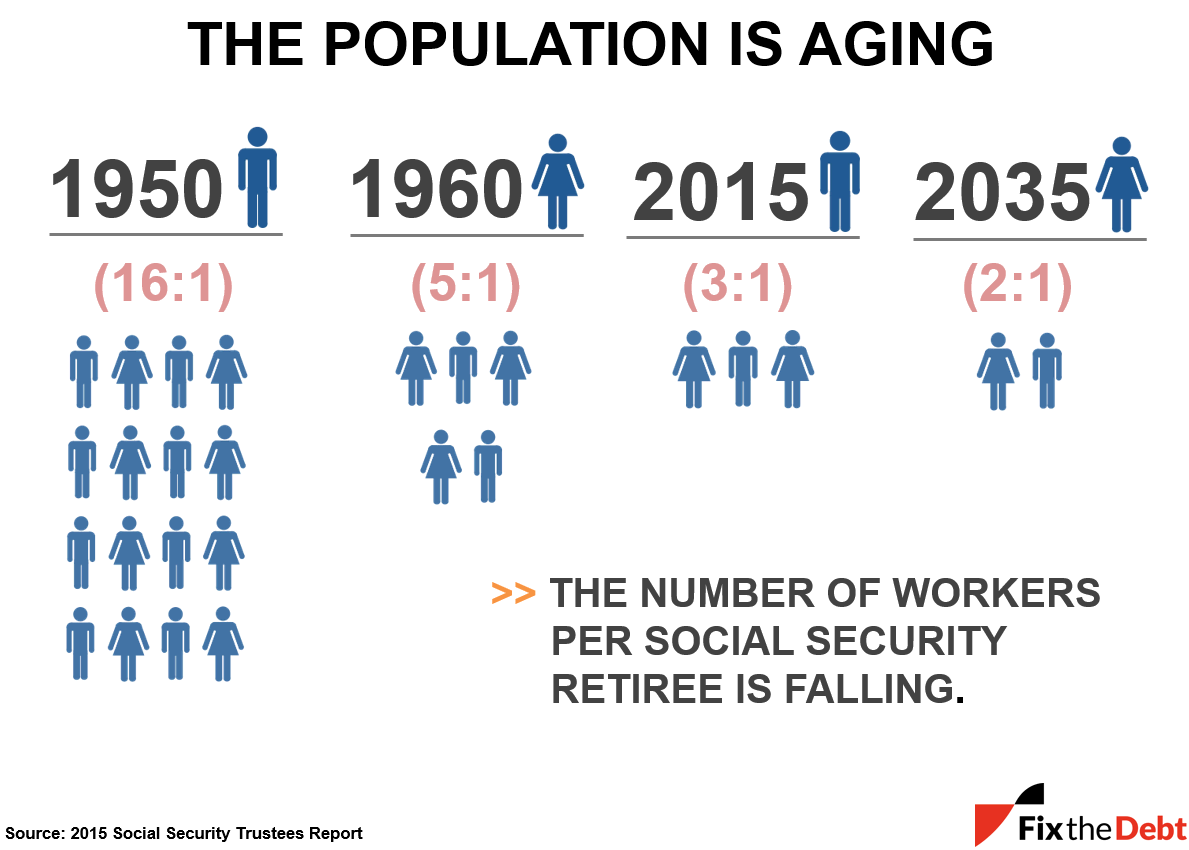

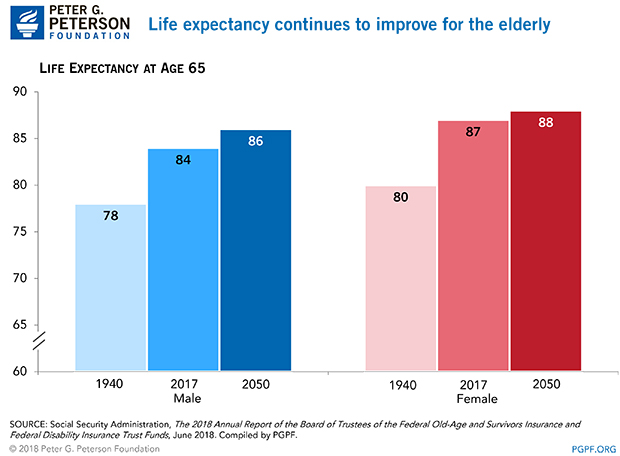

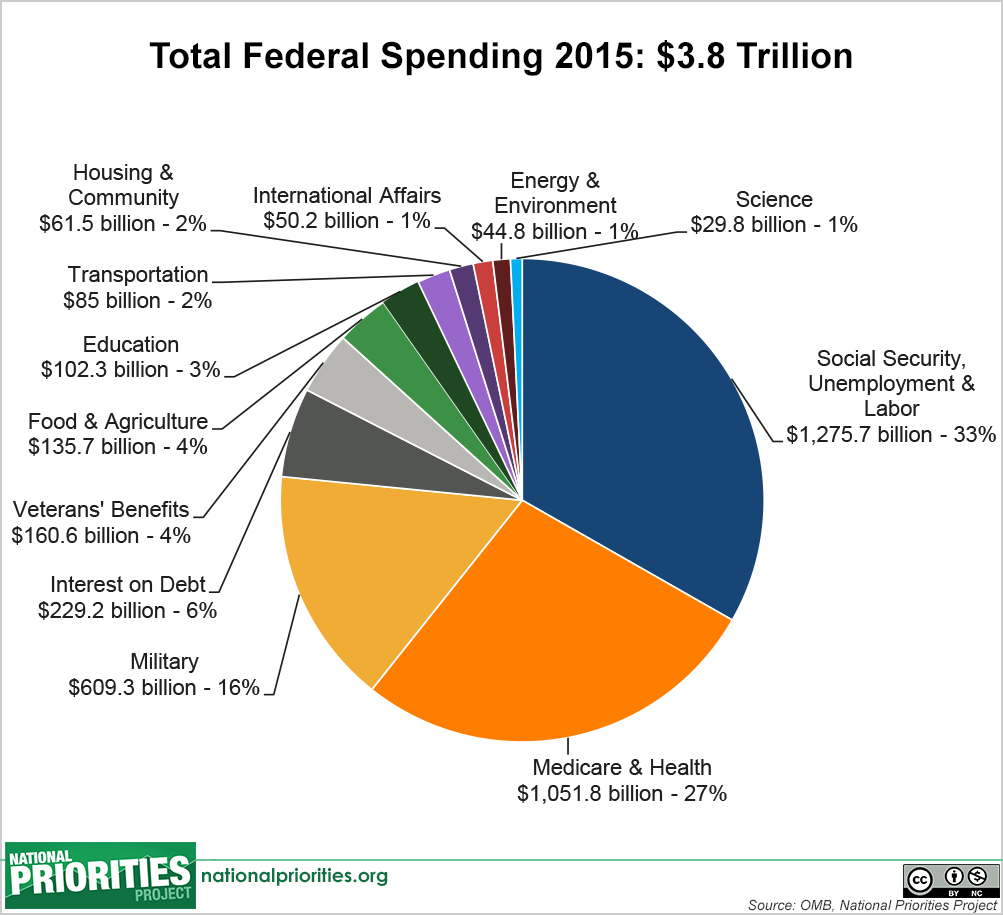
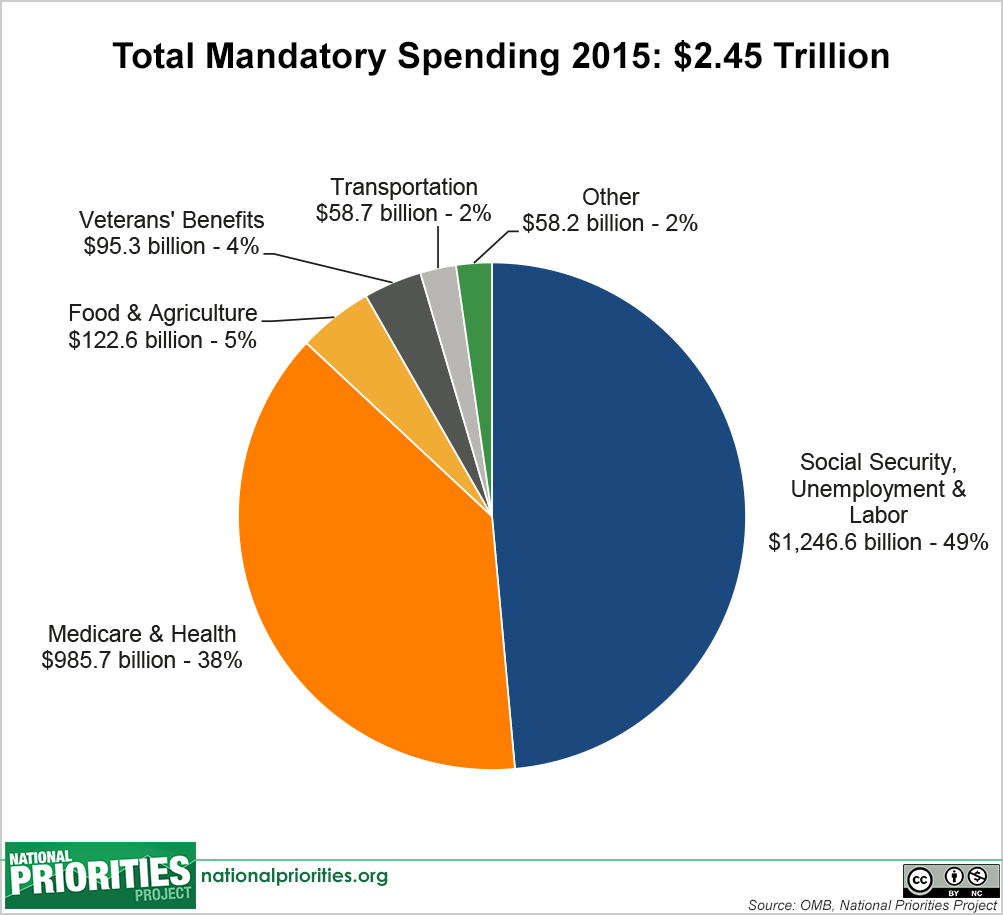





 Symposium