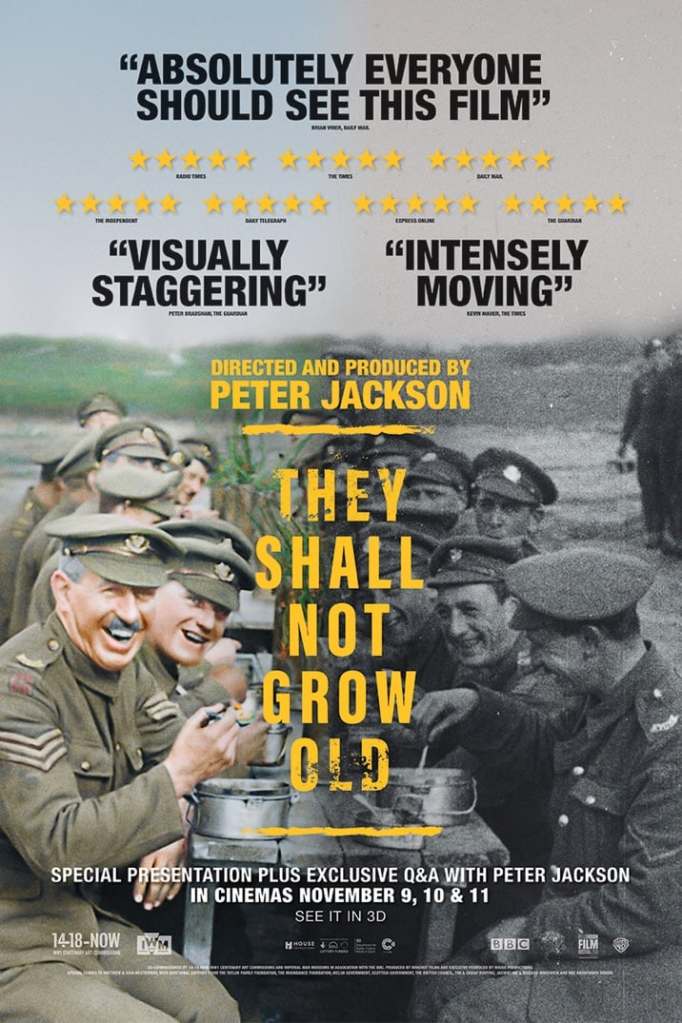
Happy Veterans Day. Here is a movie I can’t recommend enough. I saw it in the theater when it came out. Powerful and moving don’t even begin to describe it. Real footage, of real men, often in their last moments on earth.
This is as good as it gets for film to convey history and historical meaning. Watch this movie, and take a moment to be grateful for how good you have it, because of men like this.
I just finished reading Ayn Rand’s first novel, We The Living, an utterly terrifying glimpse into a fictionalized communist society that I’m sure is not as frightening as a real one. I’m currently reading Why Orwell Matters by Christopher Hitchens, and to my surprise, the topic of communism, and/or rather anti-communism, is coming up again.
Hitchens devotes his second chapter to “Orwell and the Left.” In it, he discusses how a number of leading leftist intellectuals, particularly leaders and founders of the now-dominant “cultural studies” or “anti-colonialism” fields (e.g., Raymond Williams or Edward Said), which now infiltrate and influence (if not define) nearly all the humanities and social sciences, disliked, critiqued, and even despised Orwell, for both his writing and his influence.
This seems a bit shocking at first, since such writers, like Orwell, were openly and ardently socialist or communist, and they all shared at their deepest core and founding principle a fundamentally marxist worldview that all of life, history, politics, and society is defined by class struggle. They all shared as an ultimate, utopian goal a vision of “equality” for their societies and mankind as a whole. But if so, why the scathing critiques, if not outright rejection?
The answer: betraying “The Cause.” Because Orwell had a belief even more foundational and further down in his hierarchy of values…honesty. Orwell could not close his eyes to the truth, he could not make himself look away, and he could not make himself lie about what he saw, whether it suited him or not, whether it affirmed his views or not, and whether it served his cause or not. This skill, the skill of simply being brutally, fearlessly honest with himself, was what he considered his greatest gift, his real power, the real thing that set him apart from other thinkers and writers. Not genius, not eloquence, not searing originality (though of course he had more than most), but simply “of fronting the world with nothing more than one’s simple, direct, undeceived intelligence.”
‘I knew,’ said Orwell in 1946 about his early youth, ‘that I had a facility with words and a power of facing unpleasant facts.’ Not the ability to face them, you notice, but ‘a power of facing’. It’s oddly well put. A commissar who realizes that his five-year plan is off-target and that the people detest him or laugh at him may be said, in a base manner, to be confronting an unpleasant fact. So, for that matter, may a priest with ‘doubts’. The reaction of such people to unpleasant facts is rarely self-critical; they do not have the ‘power of facing’. Their confrontation with the fact takes the form of an evasion; the reaction to the unpleasant discovery is a redoubling of efforts to overcome the obvious. The ‘unpleasant facts’ that Orwell faced were usually the ones that put his own position or preference to the test.
Christopher Hitches, “Why Orwell Matters”
Unfortunately, this is a “power” that most people, even (especially?) most intellectuals do not have. As such, when the vast body of academics, public intellectuals, and private intelligentsia were confronted with the excesses and abuses of communism, especially but not limited to the Soviet Union, they nearly unanimously chose to close ranks, turn their backs to these revelations, undermine factual criticism of their nearly-arrived people’s utopia(s), and smear the messengers of that criticism, including those with first-hand accounts, and including their own “up until now” fellow travelers. This included many dedicated, honest socialist brothers like Orwell who had not only supported the cause intellectually, but had put their bodies and lives on the line physically. Orwell himself had enlisted to fight fascists in Spain, and took a sniper’s bullet to the throat while in the trenches of the Spanish Civil War, which left him with a lifelong rasp.
It was in the context of this background that Hitchens took the above-mentioned Raymond Williams to task for attacks on George Orwell, representative of this type of influential, early communist intellectual. “One figure of the Left can be taken as representative of the general hostility” Hitchens says, explaining that Williams “was a member of the Communist generation of the 1930s and 1940s,” and “one of the germinal figures of the 1950s New Left.” In just one of the many unfair and untrue accusations Williams hurls at Orwell, he attempts to subtly undermine the reader’s possible admiration of Orwell’s worldliness and wisdom gained from years spent living abroad, including more than five years living in Burma as a colonial policeman, nearly two years in Paris, and a brief tour fighting the fascists in Spain, where he caught the aforementioned bullet.
Rather than simply and tritely admire the perspective gained from such experience, Williams, in what he surely believes to be an act of subversion of a norm (western, colonial, or otherwise), attacks from an angle in describing the admirable qualities gained from such experience as “largely illusory” and “largely negative,” acquiring for the traveler only the “appearance” of strength or hardness of character. Important among these criticisms is that the “vagrant” who lives in “exile” lacks “the substance of community.” Tying Orwell’s famous anti-authoritarian literature and stance to his “lack of community,” he writes:
“‘Totalitarian” describes a certain kind of repressive social control, but, also, any real society, any adequate community, is necessarily a totality. To belong to a community is to be a part of a whole, and, necessarily, to accept, while helping to define, its disciplines.’
To which Hitchens replies:
In other words, Williams is inviting Orwell and all of us to step back inside the whale! Remember your roots, observe the customs of the tribe, recognize your responsibilities. The life of the vagrant or exile is unwholesome, even dangerous or deluded. The warmth of the family and the people is there for you; so is the life of the ‘movement’. If you must criticize, do so from within and make sure that your criticisms are constructive.
Which brings me to the meaning of this essay. When Hitchens writes “Williams, having awarded Orwell the title of exile, immediately replaces it with the description ‘vagrant’,” I immediately thought: “Because he’s a collectivist.” That explains why choosing “exile” from the “community” is such a repulsive idea to him: to a collectivist, your identity springs not from you internally, but from your “community.” It does not blossom through and from you, it is adopted by you and gifted to you by the “community.” The “community” is invaluable and immortal. The individual is disposable, even dangerous and contemptible if he dare defy the community.
This perspective and the euphemisms that describe it are easy to spot and well familiar to anyone who has even a cursory familiarity with communist theory and history (and if you don’t, I implore you to acquire it as soon as you can; it is invaluable in understanding the world). When you understand the mind of a collectivist, you understand how much the lone thinker, the solitary individual, the man who would live in exile and reject or defy his “community” terrifies and threatens him.
“Community”…such an innocuous word, how could anything described as a “community” ever be wrong, how could it ever be insidious? What sort of insensate, what manner of brute, what kind of lout doesn’t have warm feelings about their “community?” Certainly not a good communist or revolutionary.
And this made me think about the heart and the mind of the collectivist “revolutionary,” the communist of the history books, and the Macbook-wielding marxist “revolutionaries” of today. Collectivist “revolutionaries” will only “revolt” as part of a collective or mob, within an already-existing, hermetic society of fellow-travelers applauding their virtue and bravery. To a very substantial and important degree, they’re in it for the accolades and affirmation. They revolt for validation. They will never revolt without approval from a group or their collective, never as an individual against the world, if the world be wrong or condemn them. They will never stand with the truth against the world because in the core of every communist revolutionary, besides their immense hatred of those more successful and more accomplished than they, and their enormous jealousy of those who have more, they fundamentally, desperately need approval. They wear the slogans of rebellion, but in truth are the most passionate conformists, the most desperately insecure, and the most pathetically needy. Like members of any cult, it’s not the cause that drives them, but the approval of the cult. It’s the disapproval of the cult that they fear the most, and the undermining of the cult by the individual discrediting their sacred beliefs that they find most dangerous and threatening.
That is the difference between the George Orwells and the Christopher Hitchenses of the world, and the Raymon Williamses and Ivy League communists. While both types are “of the left,” and the radical left at that, one type prefers and chooses “above all other allegiances the loyalty to truth,” whatever the consequences to one’s material circumstances or precious beliefs, while the other is a mere creature of the herd, who values above all else approval of the “community,” and will take any measures, go to any lengths, to gain the herd’s approval, and tell any lie about those who wander from the herd, and punish them for their apostasy.
As I’ve explained before, one thing I try very hard to do, even though it is sometime challenging, is to humanize people who disagree with me about issues that I find important, or about politics in general, to understand what their actual positions are, and to not just dismiss their arguments without consideration or dismiss them personally as stupid or evil. I think that’s something that everyone struggles with. Or, more accurately, something that most people don’t even try to do, but should be struggling with, as it’s just not something that comes naturally to us. Most people don’t even attempt to understand others who disagree with them, and are blissfully content seeing such people in one-dimensional, villainous tropes, which makes it very easy and emotionally satisfying to quickly dismiss them as people, and what they say and believe.
Over the last few years, for example, many have found it impossible to empathize with people who voted for Donald Trump, to intellectually understand how they could do so, and to see them as real, thoughtful, decent human beings. I heard NPR and its listeners “struggle to understand” how Trump could have been elected with their special “First 100 Days” broadcast of “Indivisible,” a show supposedly designed to foster a “national conversation about America in a time of change,” a masterfully evasive euphemism for venting NPR’s and their listeners’ existential dread and frustration regarding Trump’s victory. This call-in show was basically a screaming pillow for liberals, designed for those inside a certain political echo chamber to give each other virtual hugs and validate each other’s outrage and confusion. Well, mostly outrage feigned as confusion and interest in “bipartisan understanding.” I heard a daughter call in and say that she hadn’t talked to her mother since the election because she had voted for Trump, and while the host did the responsible thing and (very, very gingerly) suggested that severing one’s ties with a parent was not a healthy or helpful response to losing an election, the bulk of such calls focused on the callers and hosts trying to “work through together” how to reconcile that people they know and love had voted for Trump, and how to continue to love them, respect them, and maintain relationships with them despite the horrible, evil, unforgivable thing they had done.
I found the whole exercise to be immature and self-pitying in the extreme: I don’t know if anyone told these people, but, get ready for a shock: people lose presidential elections every four years. Everyone on the losing side is pissed off for awhile, stays politically annoyed during the entire term of the winning president they don’t like, and then tries to win the next one. The attitude that this particular election and the loss of their particular preferred candidate called for some extraordinary measures and national grief counseling seemed self-indulgent at best and in some way deeply dishonest at worst.
Perhaps I shouldn’t insert my own judgmental critique in the middle of an essay claiming to be about understanding. But what I’m trying to illustrate with this example is that I heard people on the left purportedly try to understand Trump voters every day on NPR, and countless times over in other media, when really what they were doing was trying to validate and understand their own feelings, not those of the people they were claiming to try to understand and reconcile with. Truly understanding why someone would vote for Donald Trump, actually intellectually grasping it and being able to articulate it, even if you drastically disagree, was something I saw little to none of. That’s why I wrote an essay about it a year later, to help those who are genuinely interested understand why someone would have voted for Donald Trump in 2016, even though I did not. There were some other great articles that explained it for those who sincerely wanted to learn, like this interview with J.D. Vance, the author of the excellent Hillbilly Elegy (which you simply must read, if you’re a reader and interested in politics). A brief, uncomfortable foray into reading a justification for supporting Donald Trump is a very important intellectual exercise for those reflexively repulsed by him, and especially those repulsed by your fellow Americans who voted for him.
I belabor you with this lengthy preamble simply to tell you that I have found another fantastic article that can help the skeptical and confused understand how Trump supporters think and what their real, authentic views actually are, as opposed to the caricature you’ll get from CNN, The New York Times, NPR, or The Washington Post. This article comes from a guest writer spot on the page of the estimable Glenn Greenwald, a prominent left-wing journalist who, in his personal politics, is probably as far left and progressive as is possible in America. I will say much more about him later, and expose you to a lot more content and arguments from him, but for now, let me just recommend that you browse his page to find all sorts of excellent, detailed content regarding today’s politics.
This particular essay comes from the author of a recently viral Twitter thread, who Glenn invited on his platform to write a full essay to fully flesh out his argument. This thread and now essay succinctly encapsulate how people who do support Donald Trump view politics, the media, and the bureaucratic security state. Specifically the “Alphabet Agencies” and their role in manipulating public opinion, as well as their apparent enthusiasm for jumping into the mud of partisan politics for whichever side they happen to pick at the moment. So while I share this essay with you to give you an honest, detailed analysis of how a large number of Americans view our political world, this essay may actually be more important in that it should give you a sobering wake-up call to the lengths enormously powerful federal agencies are willing to go to in order to spy on and destroy the lives of citizens who are inconvenient to or in the way of their political agenda.
I’ll post excerpts on my Twitter page because I know not everyone has the time or interest to read a ten page essay, especially one on as dense a topic as this. One thing I want to do for my friends and readers is cut to the chase and give them the bottom line or most important parts of a book, article, or argument, so they don’t have to dig through it themselves, and can just get right to the point and the heart of the issue.
So definitely read that essay if you can, bookmark it for reference material or to read later, and for now, note the highlights I’ve posted. The points this author raises are honestly mostly about how the media and security apparatus operate, so while the subject and point of view seem partisan because the essay is about Donald Trump and how these organizations have been weaponized to favor Democrats for now, those with any historical memory will know that not too long ago the FBI was tracking and recording every movement of Martin Luther King Jr., persecuting and blackmailing him and anyone else viewed as “subversive” or in the way of the agency’s political agenda. If you’re comfortable with the FBI and other agencies being used this way against your political enemies at this moment, then don’t be surprised and don’t feign outrage if a few administrations or a few elections from now they are turned against you.
Today, let’s take a moment to remember when men were men, who believed there were things worth fighting and dying for, and actually did it. When 18 and 19 year olds showed bravery that few grown men would today.
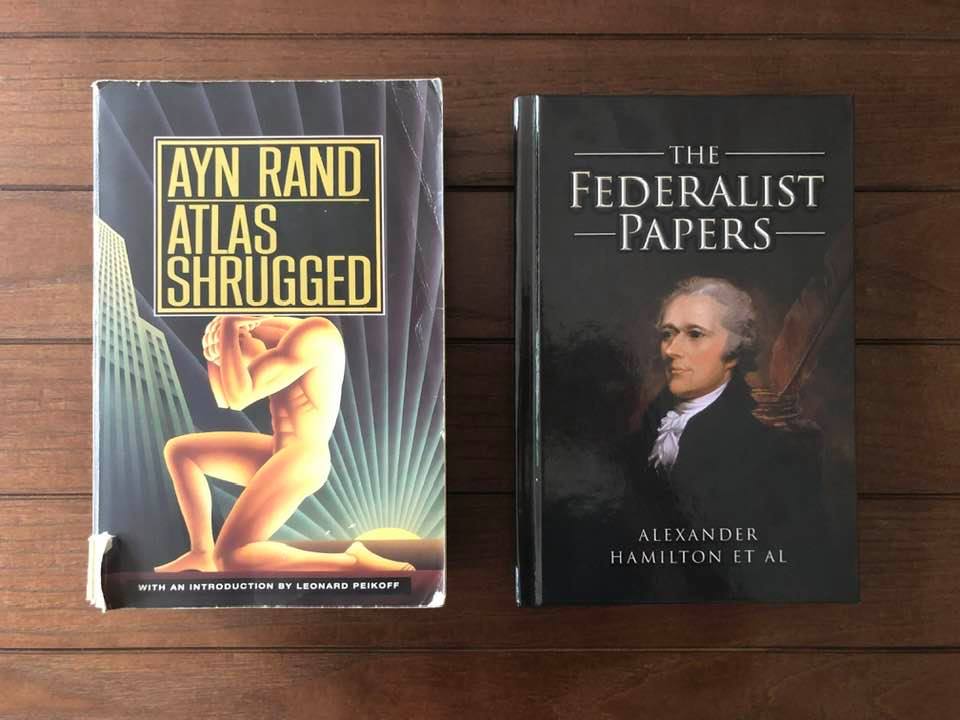
As I alluded to in a previous post, I have never read The Federalist Papers in full, nor have I studied the founding era on my own, beyond what was assigned to me in various classes throughout my academic career. I am attempting to remedy this by starting with Ron Chernow’s riveting biography of Alexander Hamilton, a book I can’t recommend highly enough. I was actually inspired to read it because I just finished another excellent biography, on Napoleon, which I also give my highest recommendation. I thought it would be good to stick with this turn of the 19th century era, since my head is already in it, and since that helped me overcome the mental hurdle that I sometimes have when a topic or a historical era seems interesting to think about, but I assume it will be dry and boring to read about. I don’t know if that happens to anyone else, but it certainly happens to me. I also just listened to a fascinating lecture by Christopher Hitchens on Thomas Jefferson that I strongly recommend, and it too made the topic seem less dry and more accessible. It’s actually a very interesting era of history, just from a storytelling perspective. And history is all about stories.
I’m at the start of a process of slowly reading all of The Federalist Papers, and I am making notes on them to help my understanding and for future review, and I thought I would share some of them with you. There is no substitute for reading Federalist #1 in terms of an introduction to how the framers viewed the Constitution and the American Experiment, and how we should view it today, so definitely read that one if you have not, or if you don’t remember. It is short, sweet, and rousing.
I would like to start by sharing my notes on Federalist #3: Concerning Dangers From Foreign Force and Influence, by John Jay, the first Chief Justice of the United States. These are just my notes from reading the original text, which I think is an important part of deep and proper understanding of any subject. I know not everyone has the time or inclination to sit with these, so I would like to share my summaries of these texts as food for thought and a bit of an easier or lighter read than the original text itself. I hope you enjoy!
———-
In addition to drafting New York’s state constitution and being a former president of the Continental Congress, John Jay was an experienced diplomat, which is why he was enlisted by Alexander Hamilton to write The Federalist essays on foreign policy. His overarching argument was that a truly United States, a single national polity, would more efficiently, safely, and rationally ensure the diplomacy and international security of the colonies than many independent states or a handful of state confederacies. He believed that a united America will give fewer “just causes for war” to foreign powers than a disunited America, and that one national government will better observe the laws of nations than thirteen separate states, or three or four confederacies. This is almost axiomatic, as one political entity will have fewer flashpoints for contention and dispute, or simple mistakes, than numerous, nominally affiliated entities.
Jay was also concerned with the quality of leadership in the realm of diplomacy, and indeed I am recently thinking that picking the right person is the top priority for the success of any project, endeavor, system, or government. The Napoleon biography makes it clear how his chief failures were mistakes in appointing the wrong people to important positions, usually his family members. I am coming to the opinion that leadership literally makes or breaks any object you undertake, whether it is diplomacy, a departmental project, or a constitution.
Jay argued that a national government will have a larger talent pool to choose from, thereby attracting better leadership, men of more talent, reputation, and other qualifications than you will have in a single state, and therefore tending towards better and wiser decision making. It will be “more wise, sytematical, and judicious than those of individual states, and consequently more satisfactory with respect to other nations,” making it more safe for us.
When it comes to foreign policy, consistency and stability are key. Jay believed that treaties and accords will be more consistent coming from one government than thirteen states or several confederacies, which would have conflicting, inconsistent, and non-accordant relations with other nations. Not only that, but the short-term or immediate prospects of sudden loss or advantage may also sway individual states or confederacies to unwise, unjust, or dangerous decisions that threaten the others. And even when the governing body of a state is wise and just, there may be local circumstances in a state, and/or an overwhelming number of imprudent or bad actors that may cause harm without the state being able to control them, whereas a national government would have the power and inclination to do so. So there will be fewer designed or accidental violations of treaties and the laws of nations under a unified government than under multiple autonomous governments, which “most favors the SAFETY of the people.”
Likewise, when it comes to violations from “from direct and unlawful violence” undertaken by certain parties in a state, a national government is better able to secure against such dangers. Because “such violences are more frequently caused by the passions and interests of a part than of the whole; of one or two states than of the Union.” Interestingly, he cites the context that it had been the states, not the national government, that had up until this time initiated unprovoked Indian wars. “Not a single Indian war has yet been occasioned by aggressions of the present federal government, feeble as it is; but there are several instances of Indian hostilities having been provoked by the improper conduct of individual States.”
He also mentions that there are Spanish and British territories that border some states, but not others, and that quarrels may more quickly and easily arise from those states, again from what you might call “local passions,” and that a national government will be more prudent and deliberative, less susceptible to these.
He further claims that a national government will have more power and be more inclined to settle disputes quickly and amicably. The pride of states, as of men, may be hot in defending their honor, quicker to rise and slower to cool and make peace. A national government will not be influenced by such local pride, again leaning more towards an inclination to peace and settlement.
When it comes to making peace, Jay again believes that a national government is in a far better position to do so than a loose coalition of states or confederacies. He claims that the terms and substantive offerings of peace are “often accepted as satisfactory from a strong united nation,” in a way that they would not be, and would instead be “rejected as unsatisfactory” if offered by a mere state or confederacy.
Finally, he uses the example of King Louis XIV of France being offended by some action on the part of the state of Genoa, and demanding that they send their chief magistrate and four senators, to “ask his pardon and receive his terms,” basically grovel before him. He clearly sees this as a sign of humiliation and submission, as “[t]hey were obliged to submit to it for the sake of peace.” Here he appeals to the national pride of Americans, having just fought the first successful war against a colonizer in history, to not put themselves in a situation as to be humiliated by mere dint of raw power again. His final sentence eloquently evinces and appeals to the national pride of Americans who wish to see their new country strong and unbowed: “Would he on an occasion either have demanded or received the like humiliation from Spain, or Britain, or any other POWERFUL nation?”
This short but powerful paper is a clinic on persuasion and rhetoric, political or otherwise. It is masterfully impressive that he can so succinctly and powerfully encapsulate nearly the entire argument for a united rather than a divided nation for the purposes of foreign policy.
If you liked this article, please subscribe to my blog by clicking the blue “Follow” button in the upper right corner (at the bottom of the article if you’re on your phone or tablet) to receive an email every time I post, which isn’t that often.
Recently, I have had the pleasure of reading Ron Chernow’s thrilling biography of Alexander Hamilton. Chernow is an excellent storyteller, and combined with the source material of Alexander Hamilton’s life being so dramatic as to be almost unbelievable, it is an exhilarating read. Of the many fascinating aspects of this book, one that has stood out to me is the truly staggering work ethic and output of Hamilton and other founding fathers. Men like Hamilton, Jefferson, and Madison lived lives of constant, daily study and relentless, merciless self-improvement.
One example of this ethic is a tidbit I would phrase as a historical “Did You Know?” piece of trivia: Did you know that Alexander Hamilton wrote The Federalist Papers in his spare time, in between practicing law to support his family? I find this information truly staggering, when you consider the timeless historical feat that the Federalist Papers represent.
This is one of those short bits of information you actually have to step back and think about for a minute to appreciate. As impressive as The Federalist Papers are, as difficult as a philosophical and legal work of this magnitude must be to create, even as a full-time academic or theorist, imagine undertaking such a herculean feat of writing squeezed in between breaks at work, and when you’ve come home in the evening after practicing law all day. You may think you’re fried and need to watch some tv after a long day at the office. Hamilton wrote The Federalist Papers.
And not to besmirch truly great men and historical figures, but it is worth noting the contrast between the working man Hamilton and his writing partner, James Madison. Madison was yet another founding father of Newtonian intellect, who devoted his entire life to ceaseless study and enlightenment. But there is a stark contrast between his life and Hamilton’s, having been born and raised with every advantage and privilege of having his life made smooth and easy for him to be able to devote himself and all his energies to his solitary study. His father was the largest slaveholder in Orange County, Virginia, and owned up to ten thousand acres of land. To quote Chernow, “Until age fifty, [he] lived in economic dependence on his father and even in congress fell back on income from the family plantation.” This does not undermine respect for his work ethic whatsoever (in fact it may enhance it, how many us would work so hard born with such privileges?), but it does highlight how much more freedom men like he and Jefferson had to pursue their energies, interests, and talents, while others like Hamilton had to place their intellectual work in between the mundane toils of daily work.
Which brings me to this: as much as it embarrasses me to admit, I have never read The Federalist Papers in full. I have read the famous ones when assigned to me in school, which I hope most of us have. But as a proponent of full intellectual understanding of a topic and of reading source materials to form my own judgement, as well as a full-hearted believer in the American Experiment, this is a piece of research that I feel is a gap in my knowledge. A gap which I now intend to fill.
Theodore Roosevelt called The Federalist Papers “on the whole the greatest book” dealing with practical politics. They are certainly the foundational theoretical texts of our entire national and constitutional experiment. I am approaching my study of them somewhat in the manner of a bible study. They are just too dense, and of course in somewhat antiquated English, to simply read through like you would a normal history book, or even treatise. In fact, they weren’t even meant to be read that way, as they were written and published in newspapers at a rate of several per week over the course of about eight months. That is the rate they were initially intended to be digested, and I honestly believe that is probably still the best method by which to approach them. So my plan is to read a few of them every week, one at a time, to slowly and deliberately digest and contemplate them. This will be somewhat of a process, which I will approach methodically, and take it slow and easy over the year, contemplating lessons as you would a religious text, which to believers in the Constitution and American greatness, it is. I am also going to be taking notes, to reinforce my learning, and for my own future reference. I began this process last night, and I will be sharing my notes and takeaways from select sections of The Federalist Papers here. I will begin later today.
A friend just sent me the following inspirational message.
Happy Birthday, America!
“244 years ago tonight Jefferson was writing a declaration that he knew would result in death once published, Washington was already trying to form an army that he knew would be outnumbered 10 to 1, and Hamilton was under curfew in New York City sneaking around trying to plan the defense of New York.
Yes, times are hard and things are divisive right now, but we’ve been here before and we got through it. We will again!”





 Symposium